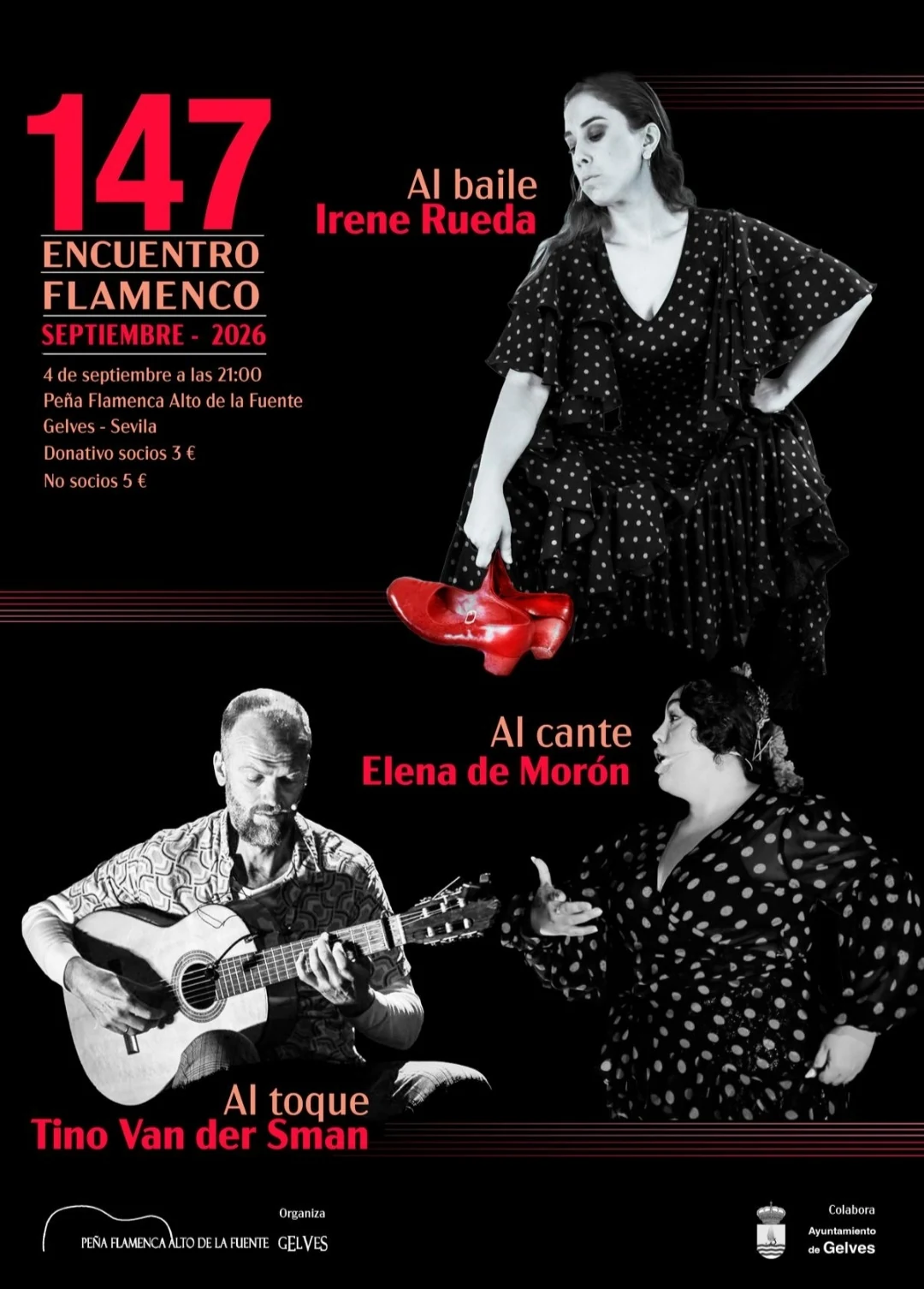


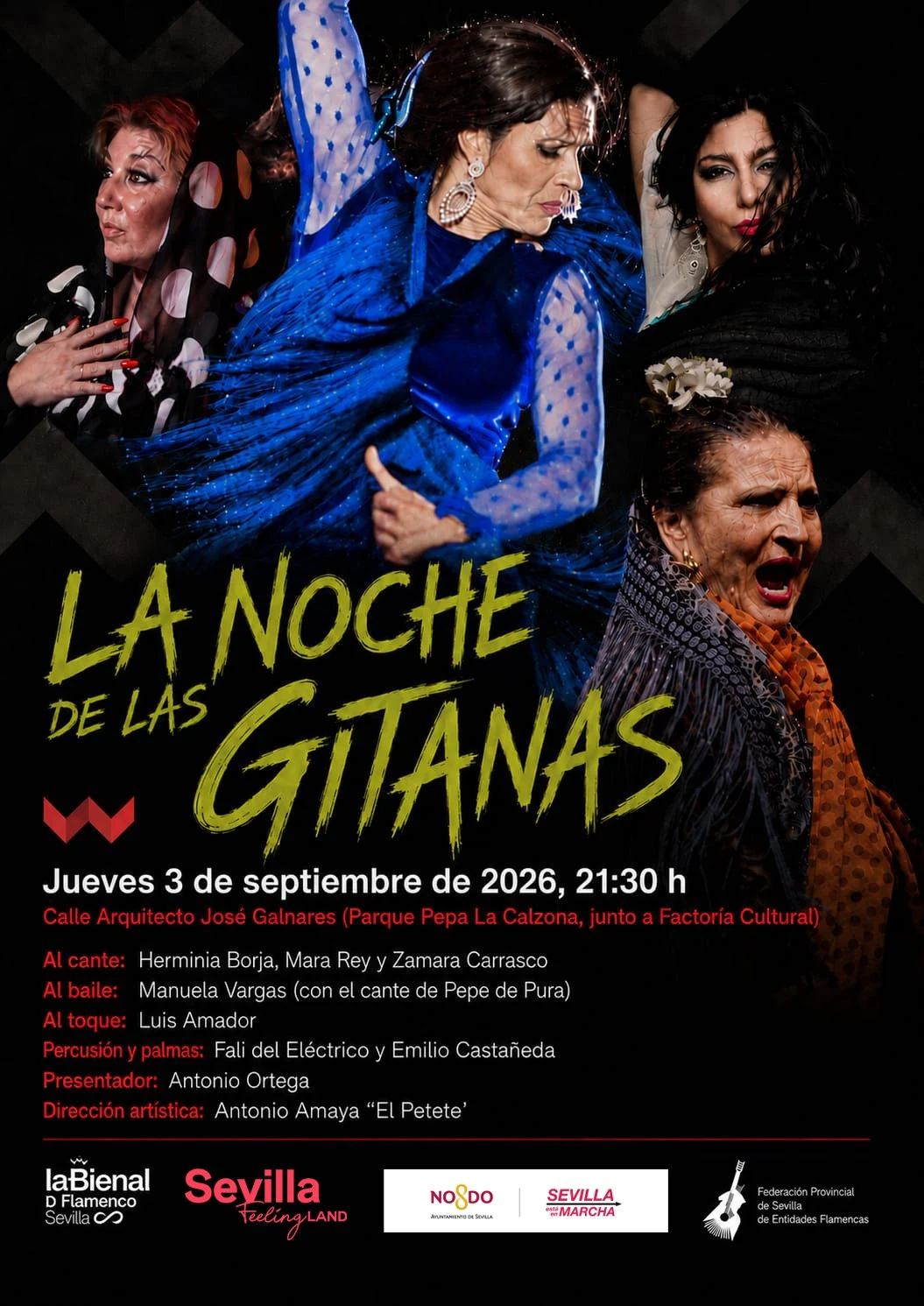
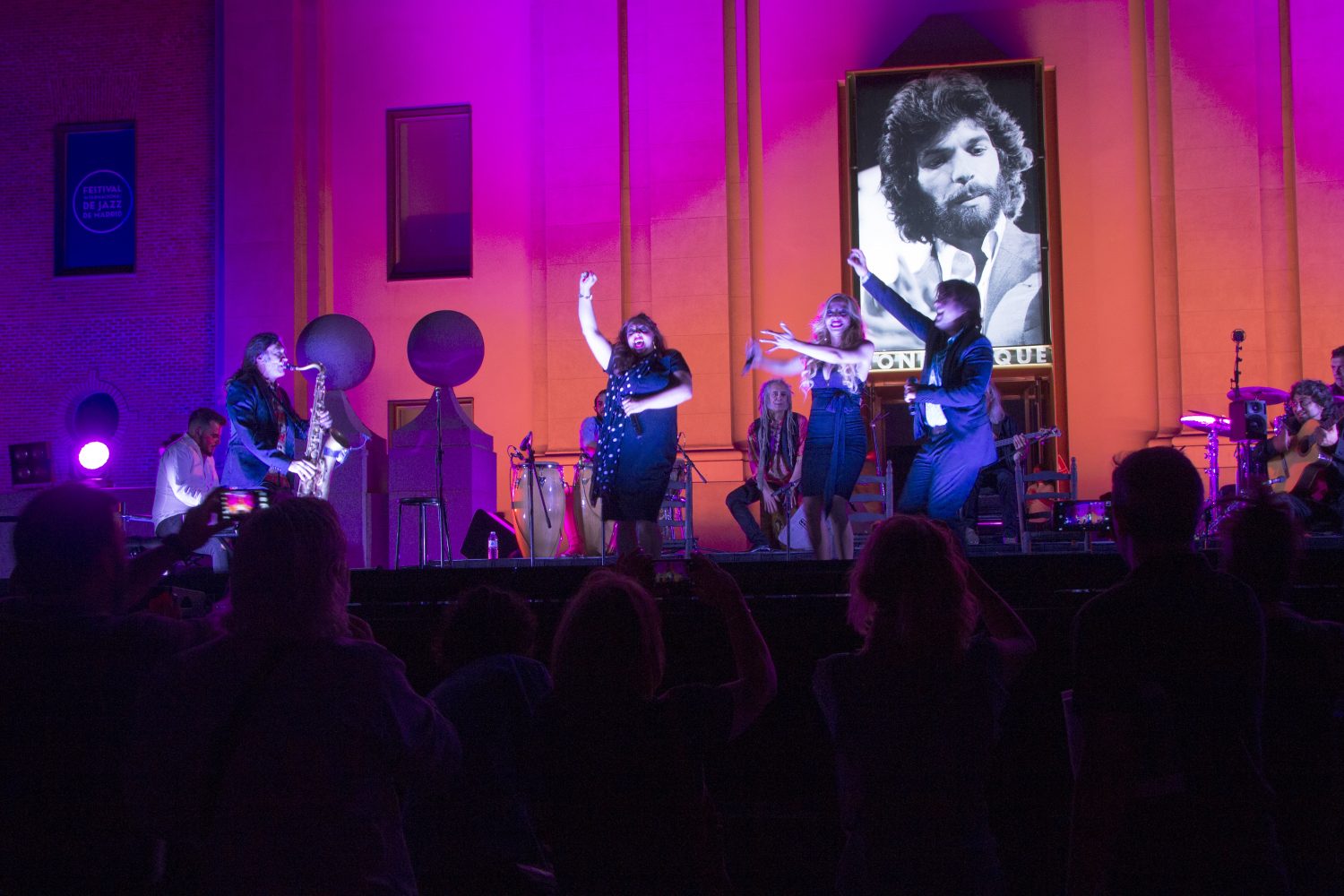
The Night of the Gypsies in Pepa La Calzona Park (next to Cultural Factory)
|
Monday
|
Tuesday
|
Wednesday
|
Thursday
|
Friday
|
Saturday
|
Sunday
|
|---|---|---|---|---|---|---|
|
0 events,
|
0 events,
|
0 events,
|
1 event,
The Night of the Gypsies in Pepa La Calzona Park (next to Cultural Factory) |
2 events,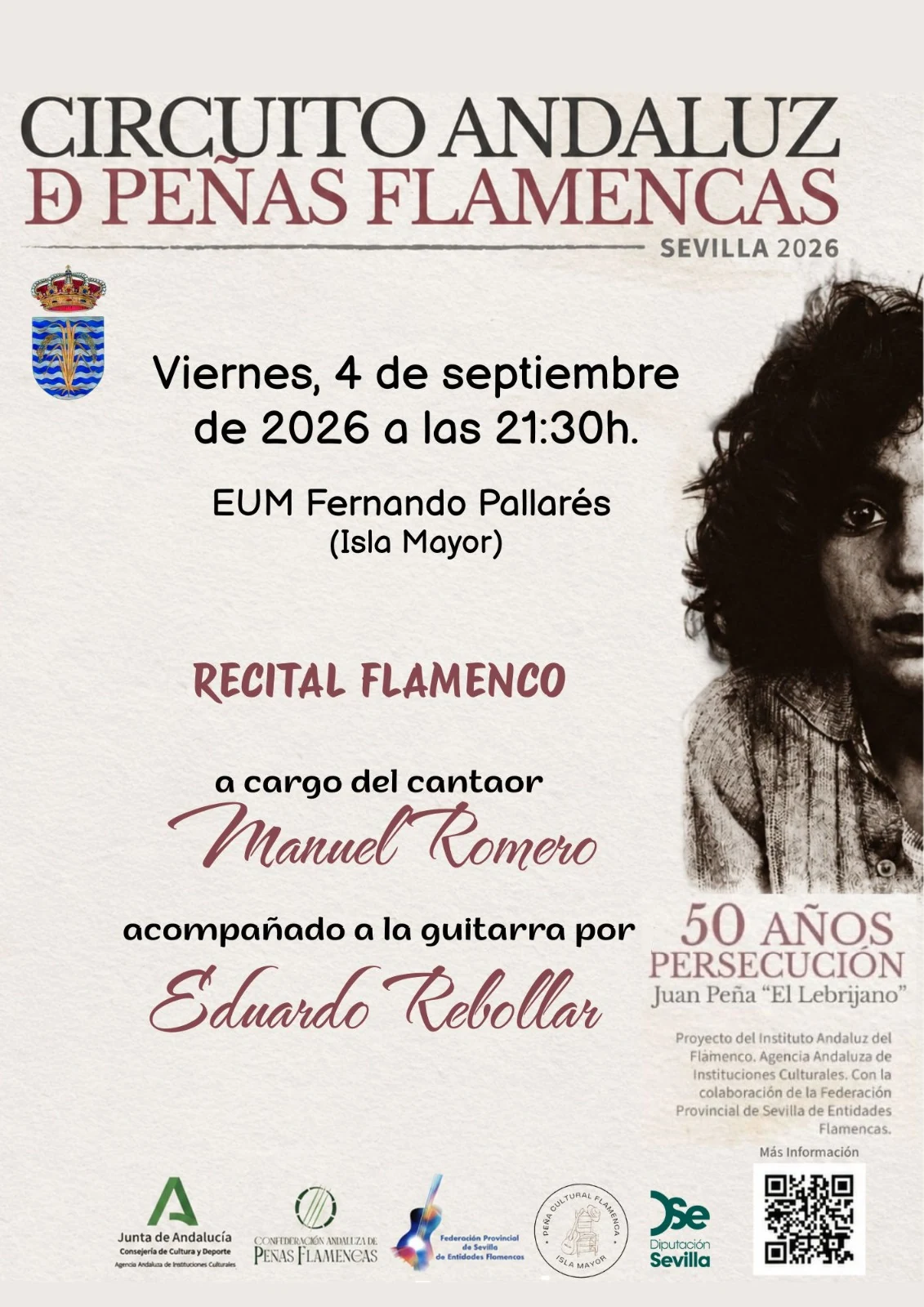
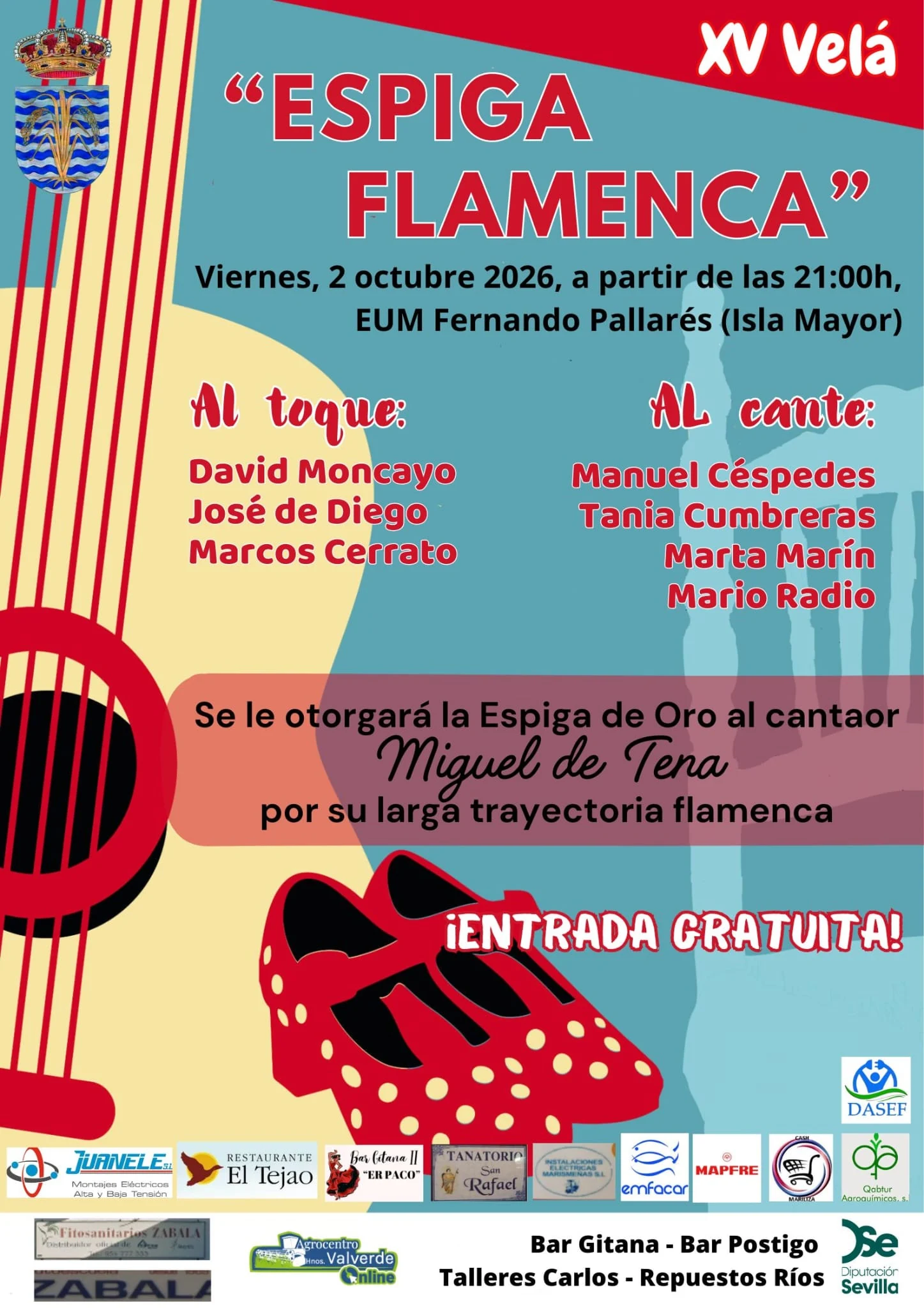
Andalusian Circuit of Peñas Flamencas – Flamenco recital at EUM Fernando Pallarés |
0 events,
|
1 event,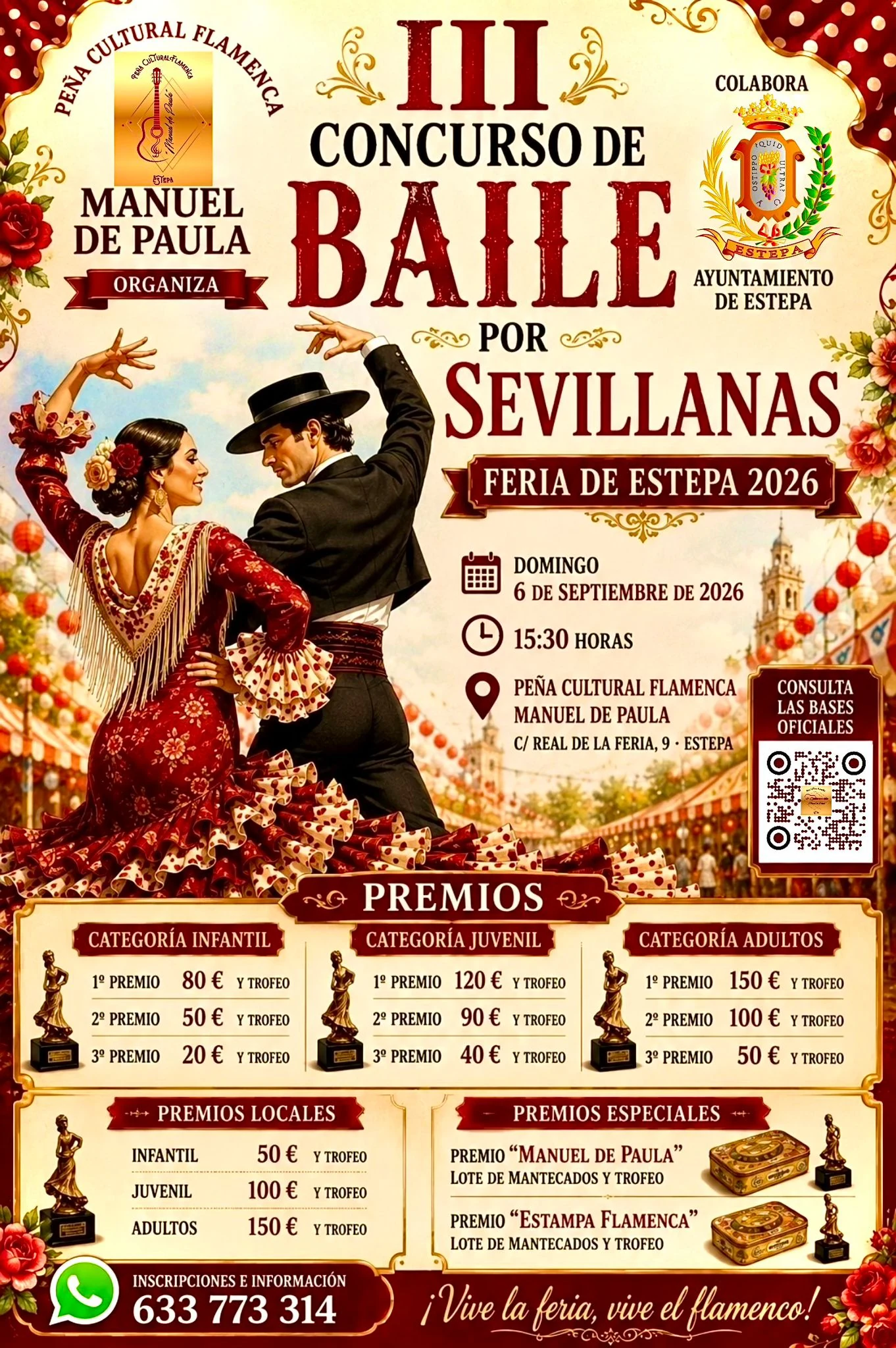
III Concurso de Baile por Sevillanas de la Feria de Estepa 2026 en la Peña Cultural Flamenca Manuel de Paula. Domingo 6 September, 15:30 h. |
|
0 events,
|
0 events,
|
3 events, |
3 events,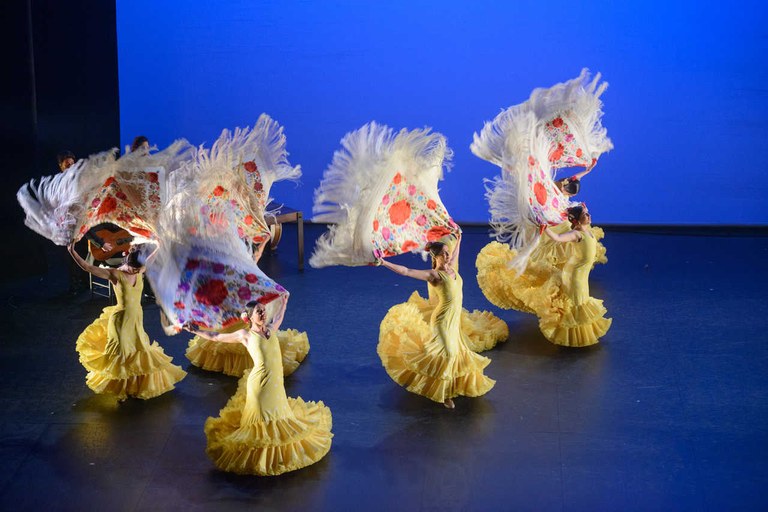
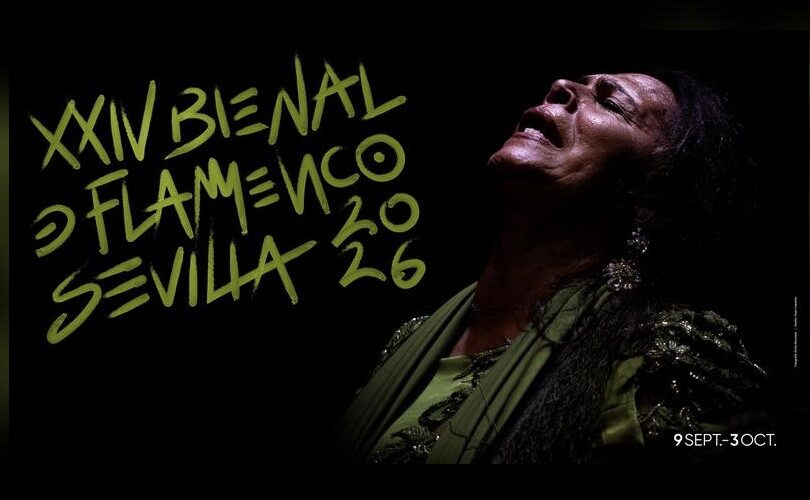
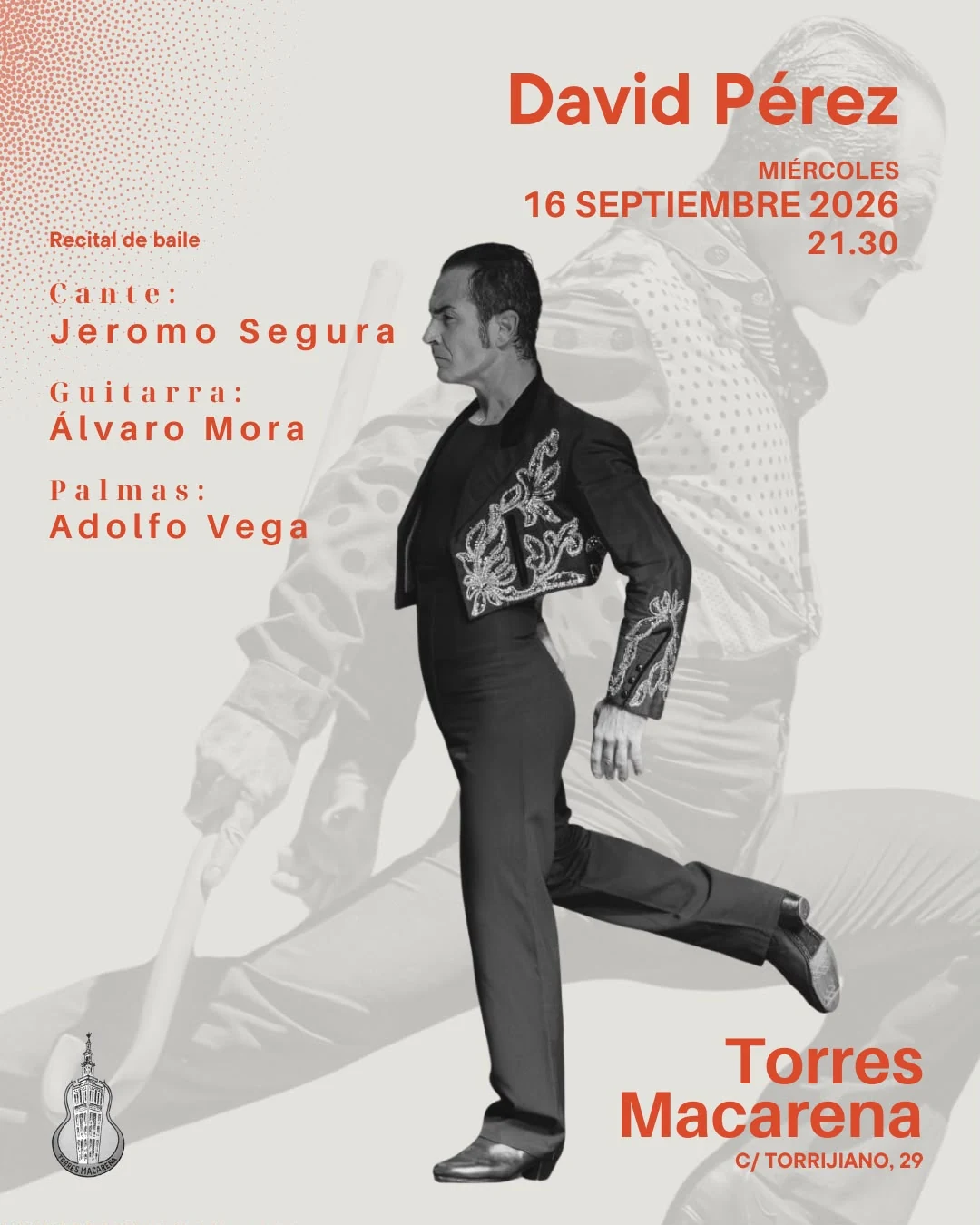
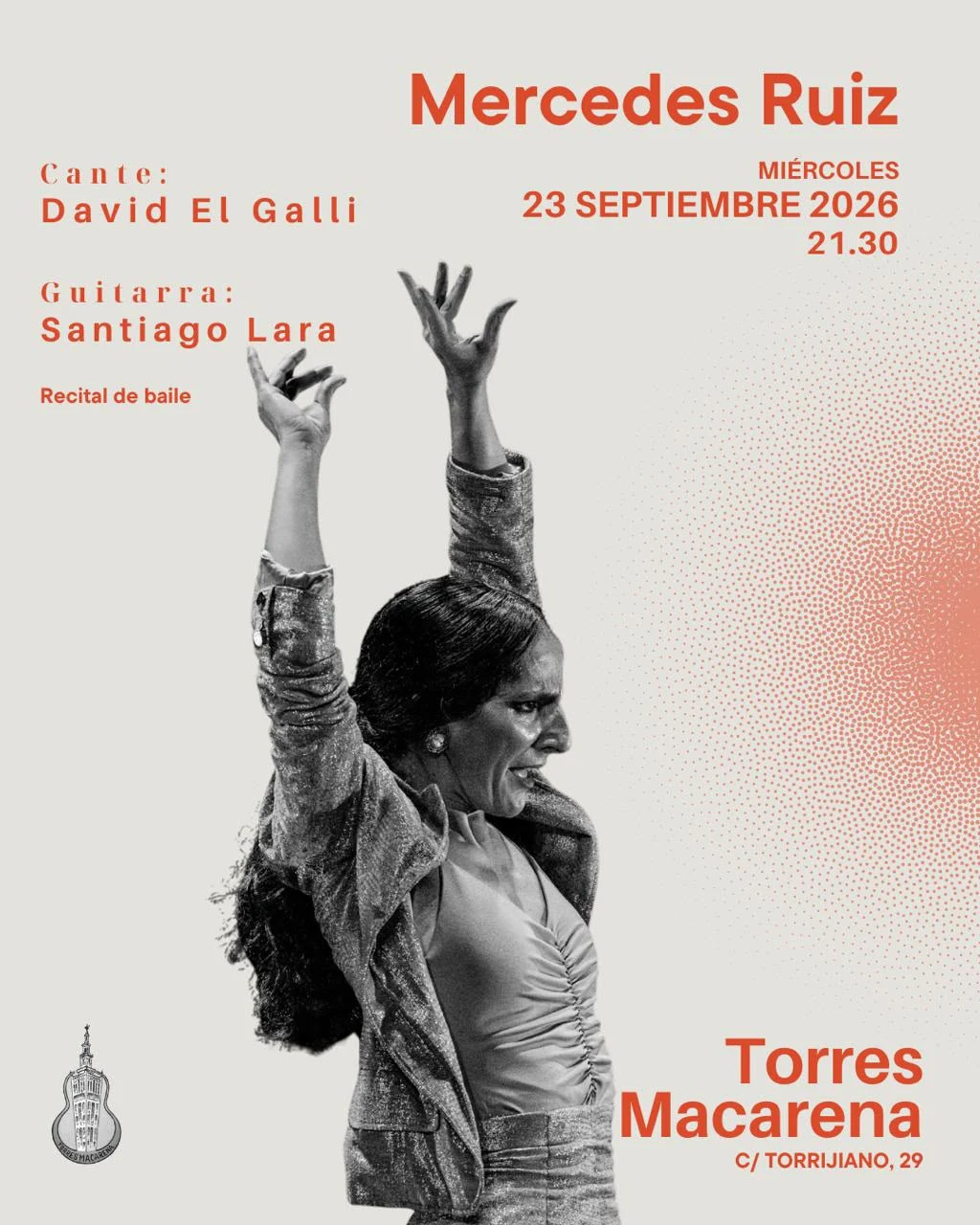
XXIV Flamenco Biennial Artists José Mercé José de la Tomasa Martirio Arcángel La Tremendita Ballet Flamenco de Andalucía with Patricia Guerrero Ángeles Toledano El Perrete Manuel de la Tomasa Guitars: Manolo Franco, Alfredo Lagos and David de Arahal Saxophone Duo: Juan Jiménez and Alfonso Padilla Percussion/claps: The Oruco, Abel Harana, Daniel Suarez and…
22.50€
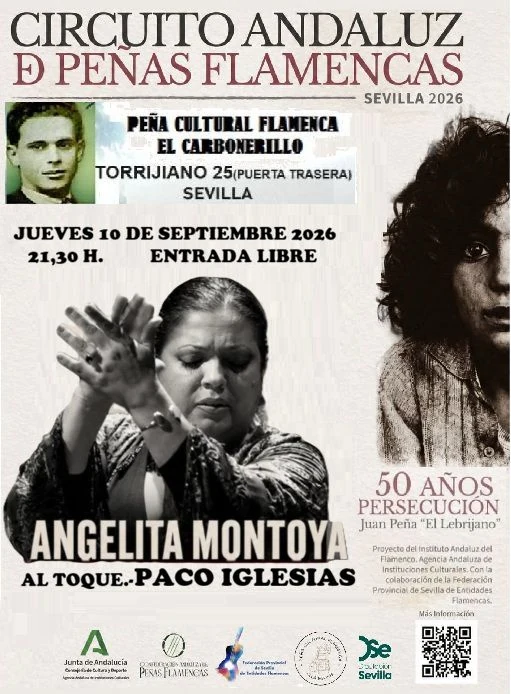
Andalusian Circuit of Peñas Flamencas Seville 2026: Angelita Montoya at Peña Cultural Flamenca El Carbonerillo (C/ Torrijiano, 25, back door)
Free
|
7 events,
-
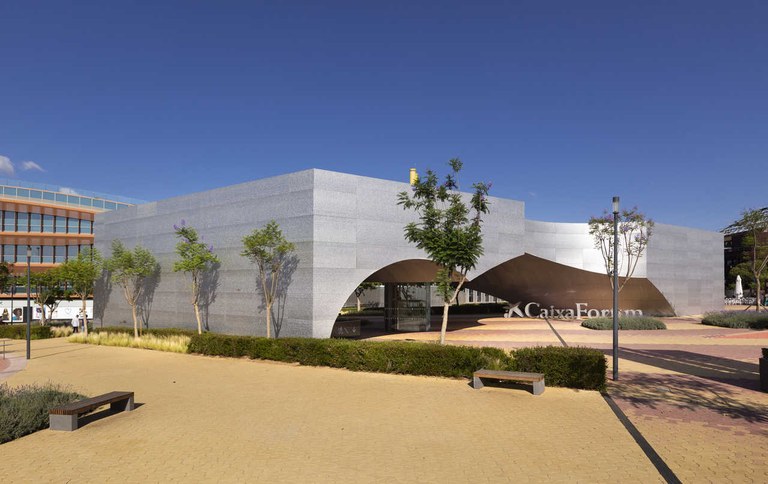
XXIV Flamenco Biennial Free show Friday 11 September 2026 - Caixaforum: 17:30h a 20:00h
Free
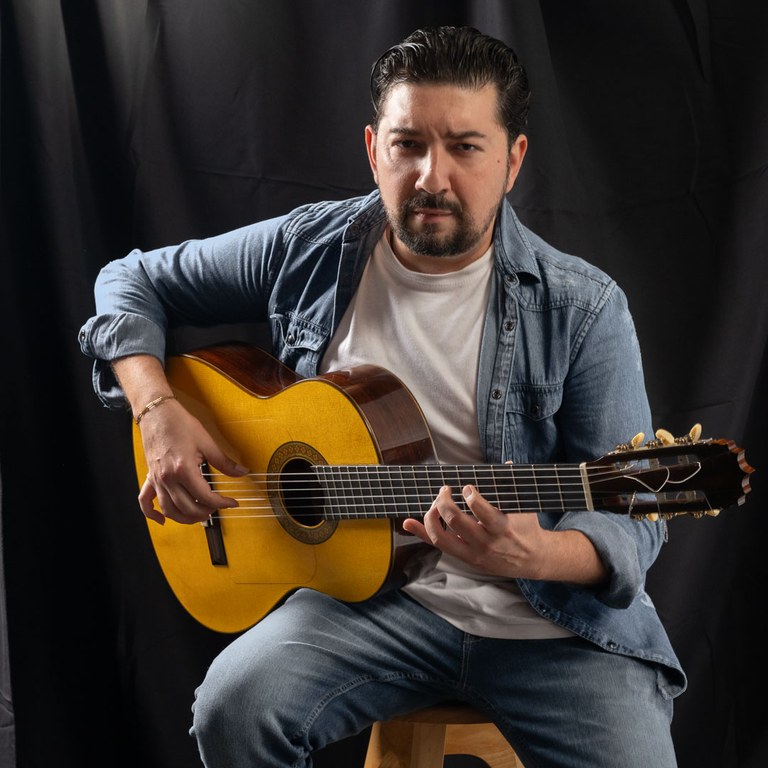
XXIV Flamenco Biennial ANTONIO REY Stories of a flamenco Guitar: Antonio Rey Cante: Mara Rey Second guitar: Manuel Heredia Flute: Juan Parrilla Percussion: Bandit They say that, like a gigantic vine that sprouted from the depths of a fertile and fruitful land, the duende spread throughout history throughout…
13.50€
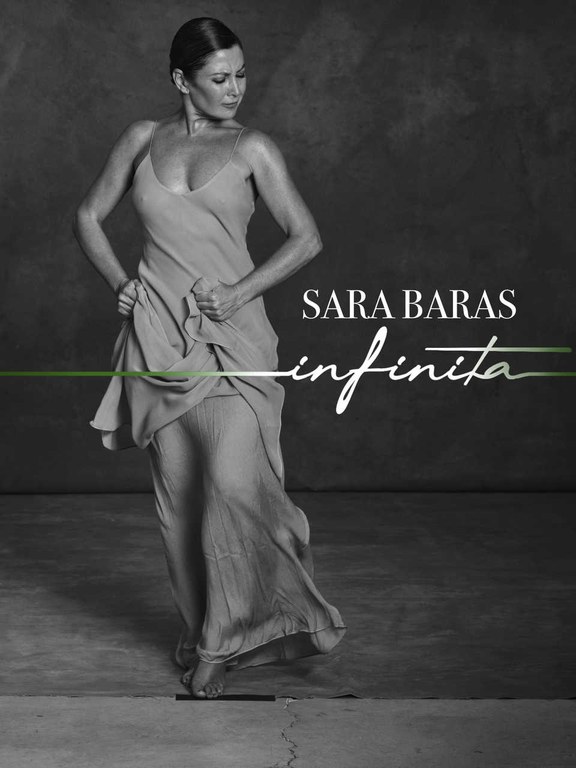
XXIV Flamenco Biennial “Infinita is born from an identity, born from an inheritance, born of time, from a land that gives us and teaches us, a palpitating that does not stop. Eight looks of a woman, eight women looking at us, and a single pulse embodying Andalusia, beating to the beat of flamenco. A dance that does not explain, what…
41.40€
|
11 events,
-
XXIV Flamenco Biennial Free show Saturday 12 September 2026 - Caixaforum: 11:30h a 14:30h and from 4 p.m. to 8 p.m.
Free
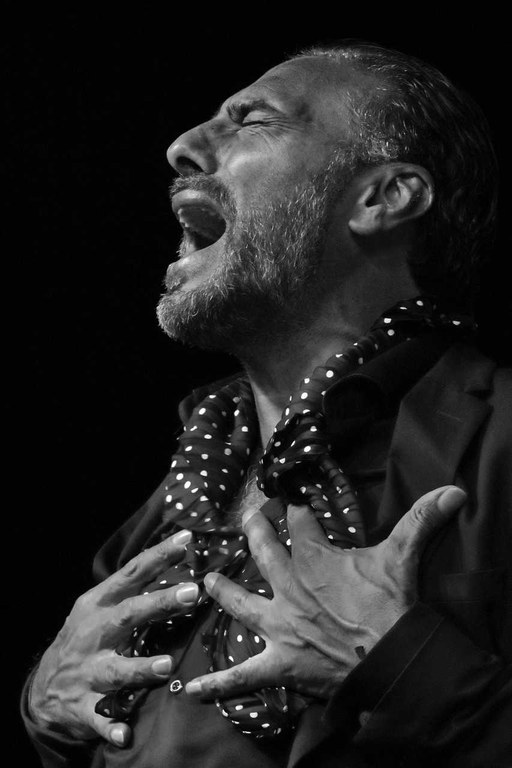
XXIV Flamenco Biennial Flamenco singing is a living heritage that, as happens in classical music, It would have to be treated with a historicist character when going back several centuries in history. The singing, besides, It not only adapts to echoes and expressions in its variety of nuances, but also to the spaces, even to… 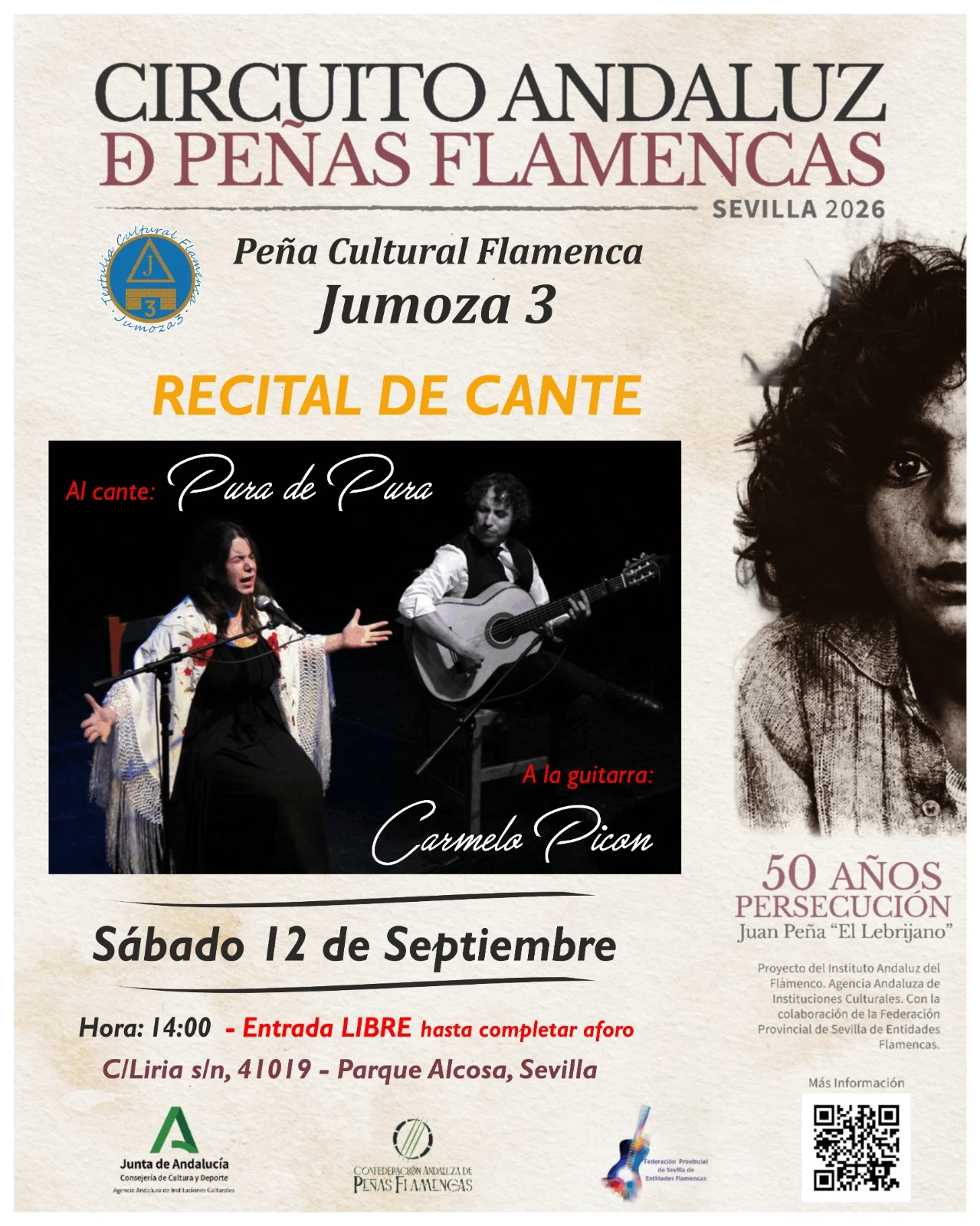
Andalusian Circuit of Peñas Flamencas – Singing recital at Peña Cultural Flamenca Jumoza 3 (C/ Liria s/n, 41019, Alcosa Park)
Free
|
6 events,
-
XXIV Flamenco Biennial Free Show Sunday 13 September 2026 - Caixaforum: 11:30h a 14:30h and from 4 p.m. to 8 p.m.
Free
XXIV Flamenco Biennial Flamenco singing is a living heritage that, as happens in classical music, It would have to be treated with a historicist character when going back several centuries in history. The singing, besides, It not only adapts to echoes and expressions in its variety of nuances, but also to the spaces, even to…
-
XXIV Flamenco Biennial Free Show Sunday 13 September 2026 - Caixaforum: 11:30h a 14:30h and from 4 p.m. to 8 p.m.
Free
|
4 events,
XXIV Flamenco Biennial Artistic Sheet TITLE: "Rhapsody. Underground Fantasy” Ana Morales Artistic direction and choreography: Ana Morales Musical direction: Child from Elche Dance: Ana Morales Flamenco guitar: Manolo Franco Saxophone & electronic: José Venditti Conceptual support and texts: Enrique Fuenteblanca Lighting design: Jorge Colomer Production Management: María Velasco Technical direction and lighting:…
27€
XXIV Flamenco Biennial Monday 14 September 2026 - Royal Alcazar: 21:30 hours 
XXIV Flamenco Biennial Artistic Sheet ABOVE ALL THINGS Macarena López Address, choreography and performance: Macarena López Artistic accompaniment in direction and dramaturgy: Ernesto Artillo Original idea and texts: Macarena López and Ernesto Artillo Dramaturgical and choreographic advice: Isabel Vázquez Musical direction: Francis Gómez External view in musical direction: Archangel Design…
27€
|
3 events,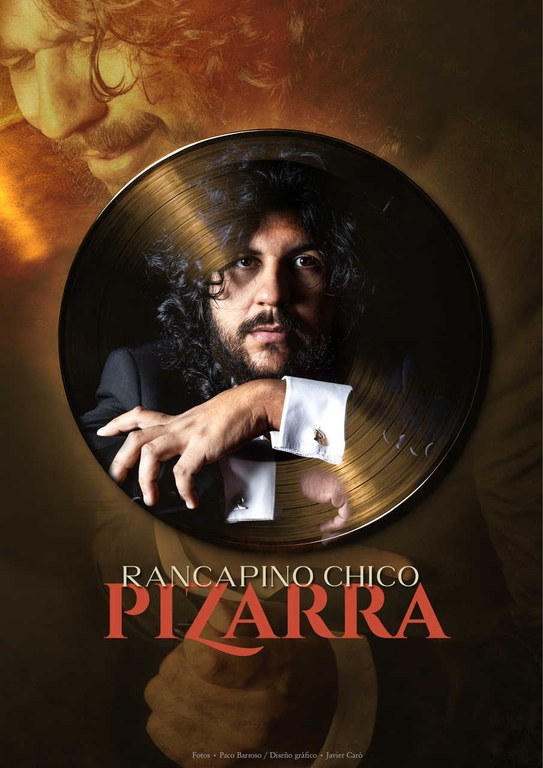
XXIV Flamenco Biennial RANCAPINO CHICO Pizarra Cante: Rancapino Boy Guitar: Antonio Higuero Palms and fuss: Edu Gómez and Naim Real The slate flamenco discography is a treasure. An “old testament of sound” where the singing and playing were recorded in their original form for posterity.. Three minutes to end tradition…
27€
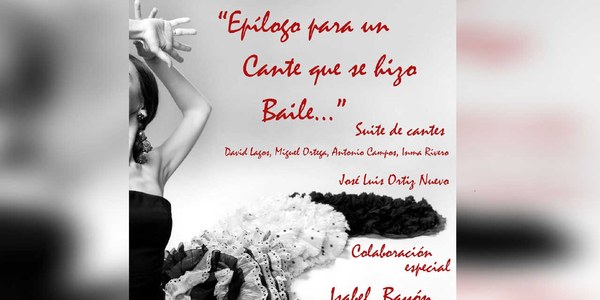
XXIV Flamenco Biennial Idea and direction: Isabel Bayón Musical direction: Jesús Torres Guest singers: Antonio Campos, David Lagos, Miguel Ortega and Inma Rivero Guest guitarists: Jesus Torres, Juan Antonio Suárez “Canito” and Paco Irriaga Song Contador: José Luis Ortíz New Special collaboration with the dance: Isabel Bayón Sound technician: Manu Meñaca Technician of…
27€
|
6 events,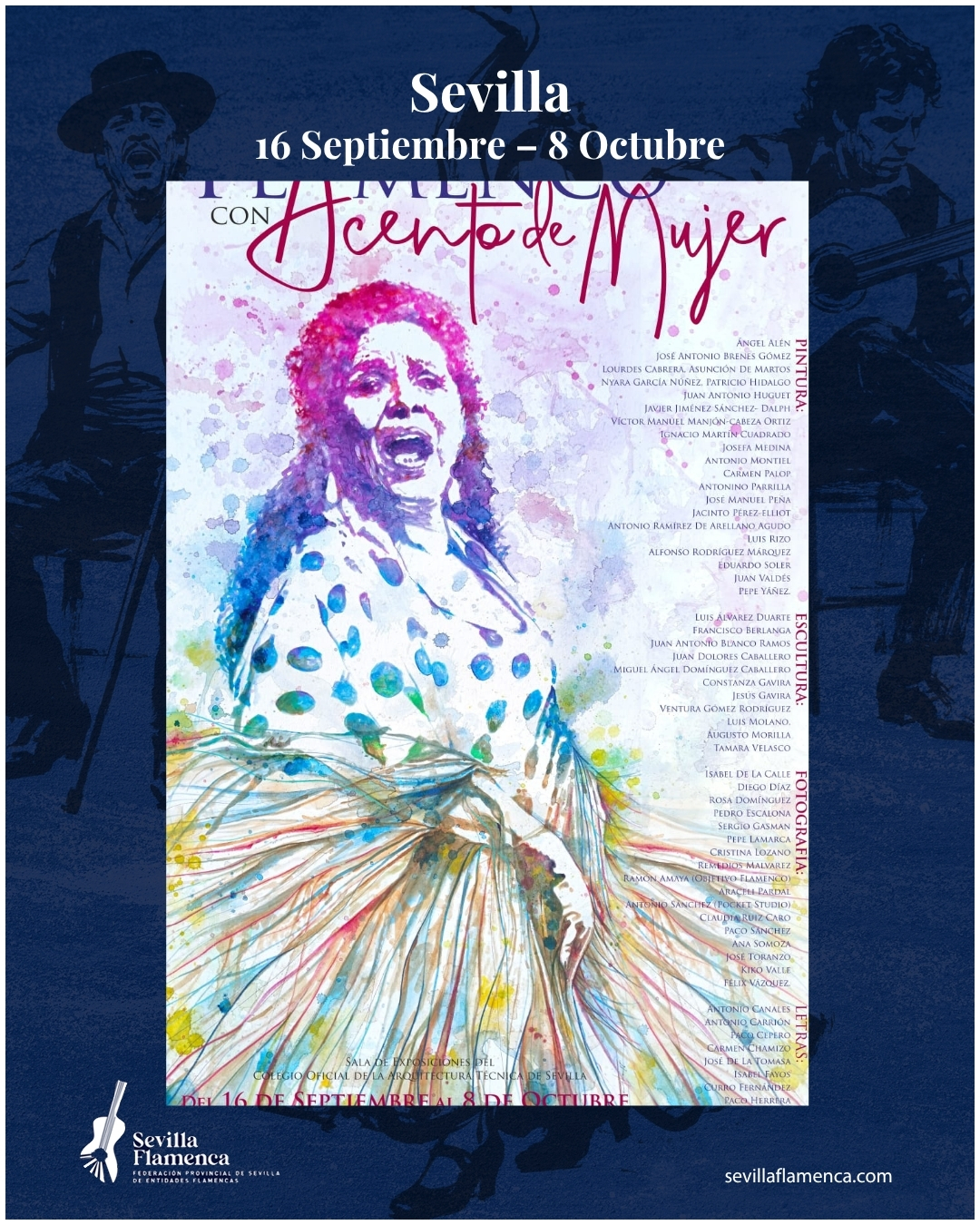
Flamenco Exhibition with a Woman's Accent in the Exhibition Hall of the Official College of Technical Architecture of Seville
Free
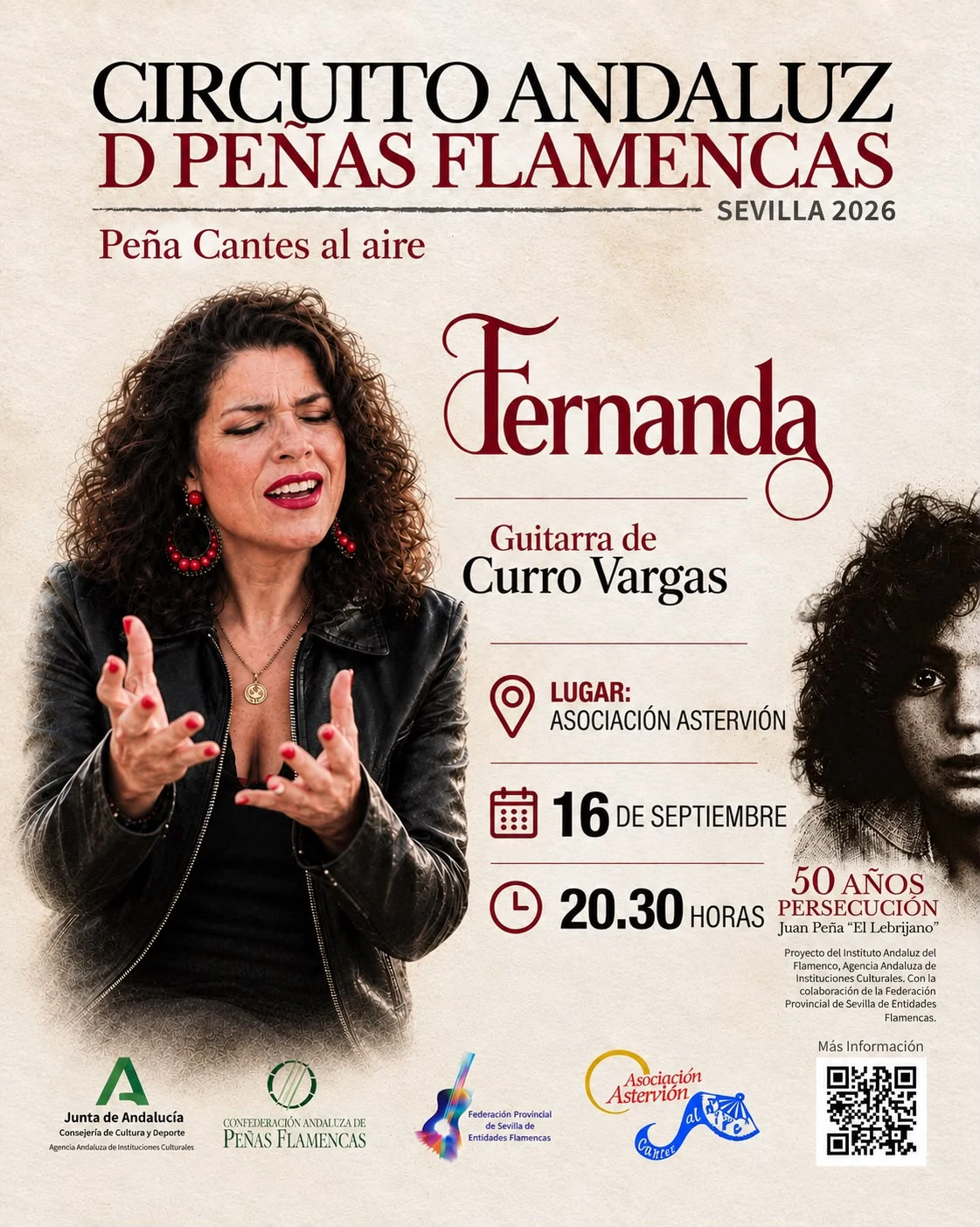
Andalusian Circuit of Peñas Flamencas Seville 2026 – Fernanda in Astervión Association
LUIS THE ZAMBO, ACHES PAINS, ANTONIO DE LA MALENA, MANUEL VALENCIA, THE TATAS OF SHERRY – Xerezanías
LUIS THE ZAMBO, ACHES PAINS, ANTONIO DE LA MALENA, MANUEL VALENCIA, THE TATAS OF SHERRY – Xerezanías
XXIV Flamenco Biennial Wednesday 16 September 2026 - Royal Alcazar: 21:30 hours
27€
|
4 events,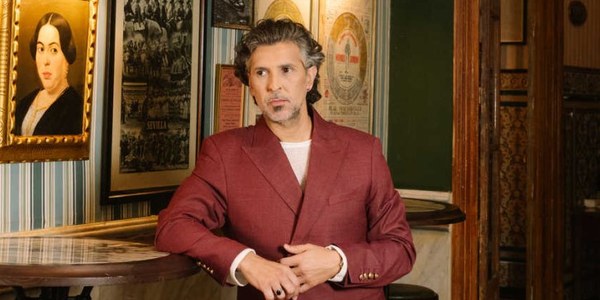
XXIV Flamenco Biennial There are many figures of Flamenco art, especially those belonging to the first period of the 20th century that, apart from its unquestionable respect for the most traditional roots, They have naturally taken a look at a genre as popular as the copla. Numerous recordings of the artists remain as testimony…
10€
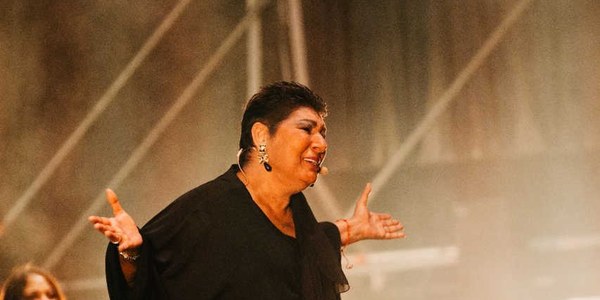
XXIV Flamenco Biennial GYPSY WOMEN Remedios Amaya, Montse Cortes and La Fabi Cante: Amaya Remedies, Montse Cortés and La Fabi Guitar: Josemi Carmona and José Serrano Percussion: Israel Suárez “Piranha” Bass: Álvaro Llanos Choirs and clapping: Los Cherokee Gypsy Women is a proposal that arises from the flamenco musical The Truth Hurts, project conceived with the objective…
27€
|
13 events,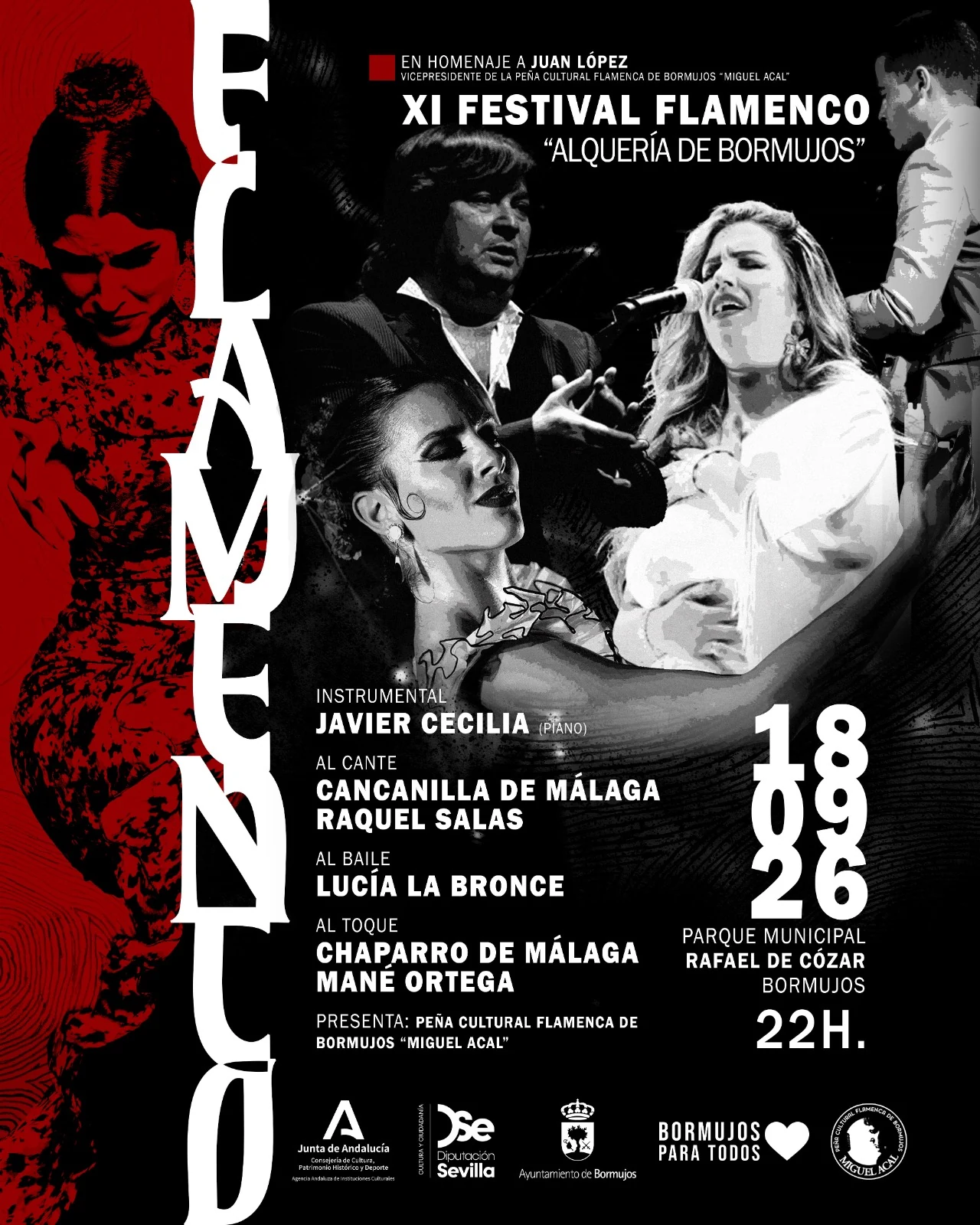
XI Festival Flamenco "Bormujos Alquería" en Parque Municipal Rafael de Cózar
Free
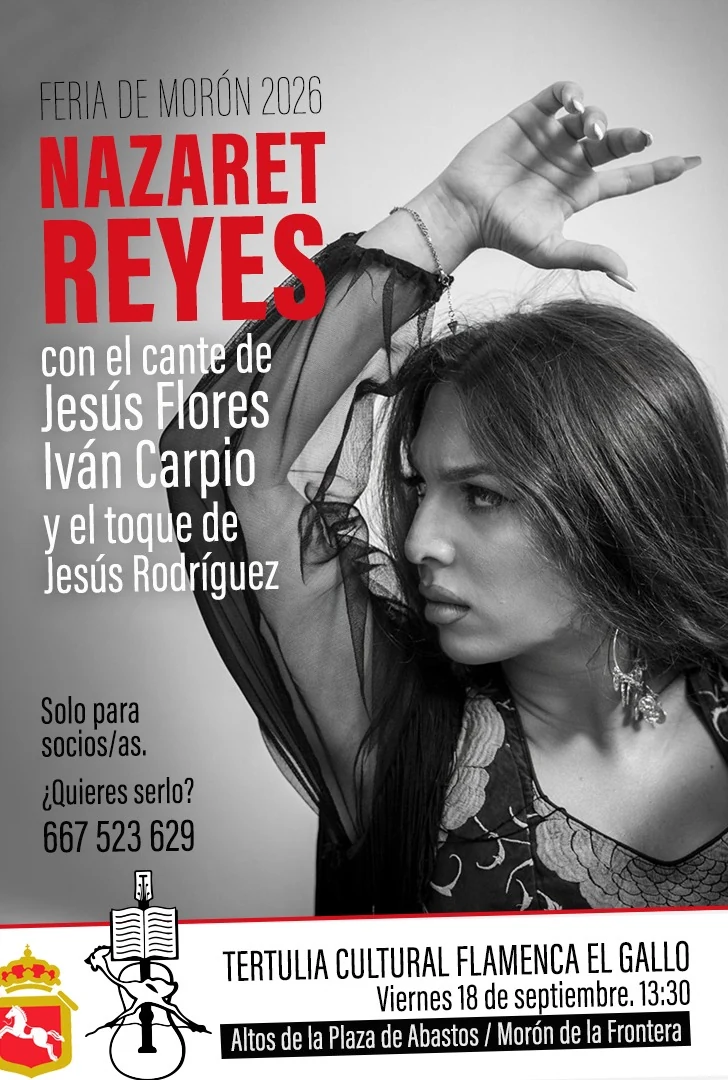
Morón Fair 2026 – Nazaret Reyes at El Gallo Flamenco Cultural Tertulia (Heights of the Plaza de Abastos) 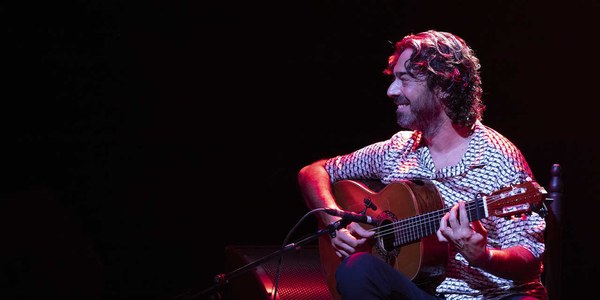
XXIV Flamenco Biennial Friday 18 September 2026 - Turina Space: 19:00 hours
13,50€
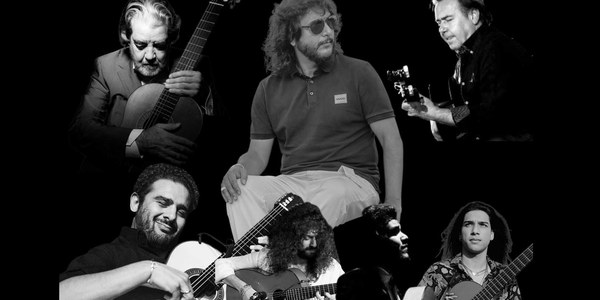
XXIV Biennial of Flamenco Singing: Antonio Reyes Guitars: Rafael Riqueni Manolo Franco Diego del Morao Joni Jiménez José del Tomate Nono Reyes Management and Production: María Larroca and Juan Ramón Reyes. Antonio Reyes approaches this recital as a step forward in his career, confronting the nuances of his singing with the guitar accompaniment of artists…
10€
|
11 events,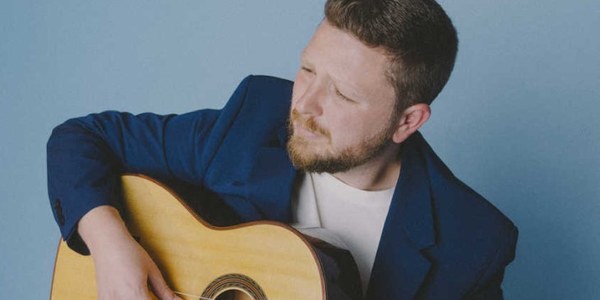
XXIV Flamenco Biennial Evolution of the guitar Guitar: Alejandro Hurtado Special collaboration: Enrike Solinís In collaboration with the Seville Early Music Festival The appointment with Alejandro Hurtado at the Seville Biennial 2026 consecrates the man from Alicante to the chosen place of total guitarist of our time. The one who has in his head and in…
27€
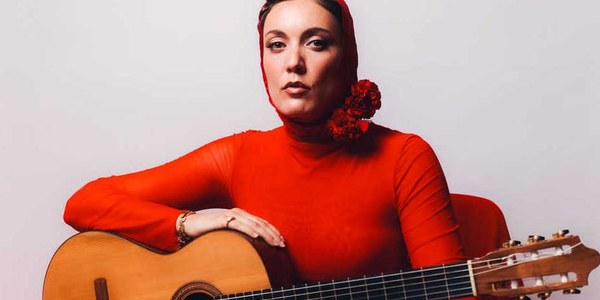
XXIV Flamenco Biennial Saturday 19 September 2026 - Turina Space: 19:00 hours
13.50€
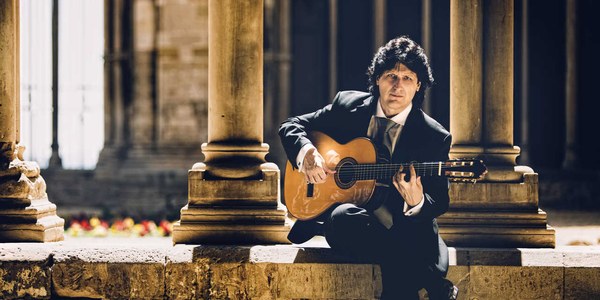
XXIV Flamenco Biennial JUAN MANUEL CAÑIZARES Cañizares National Music Award (Sabadell, Barcelona. 1966), distinguished with the National Music Award (Interpreter, 2023), He is a guitarist and composer, and one of the most influential figures in flamenco internationally.. Added to this recognition is the National Flamenco Guitar Award. (1982) and the prize…
25.20€
|
7 events,
XXIV Flamenco Biennial Evolution of the guitar Guitar: Alejandro Hurtado Special collaboration: Enrike Solinís In collaboration with the Seville Early Music Festival The appointment with Alejandro Hurtado at the Seville Biennial 2026 consecrates the man from Alicante to the chosen place of total guitarist of our time. The one who has in his head and in…
27€
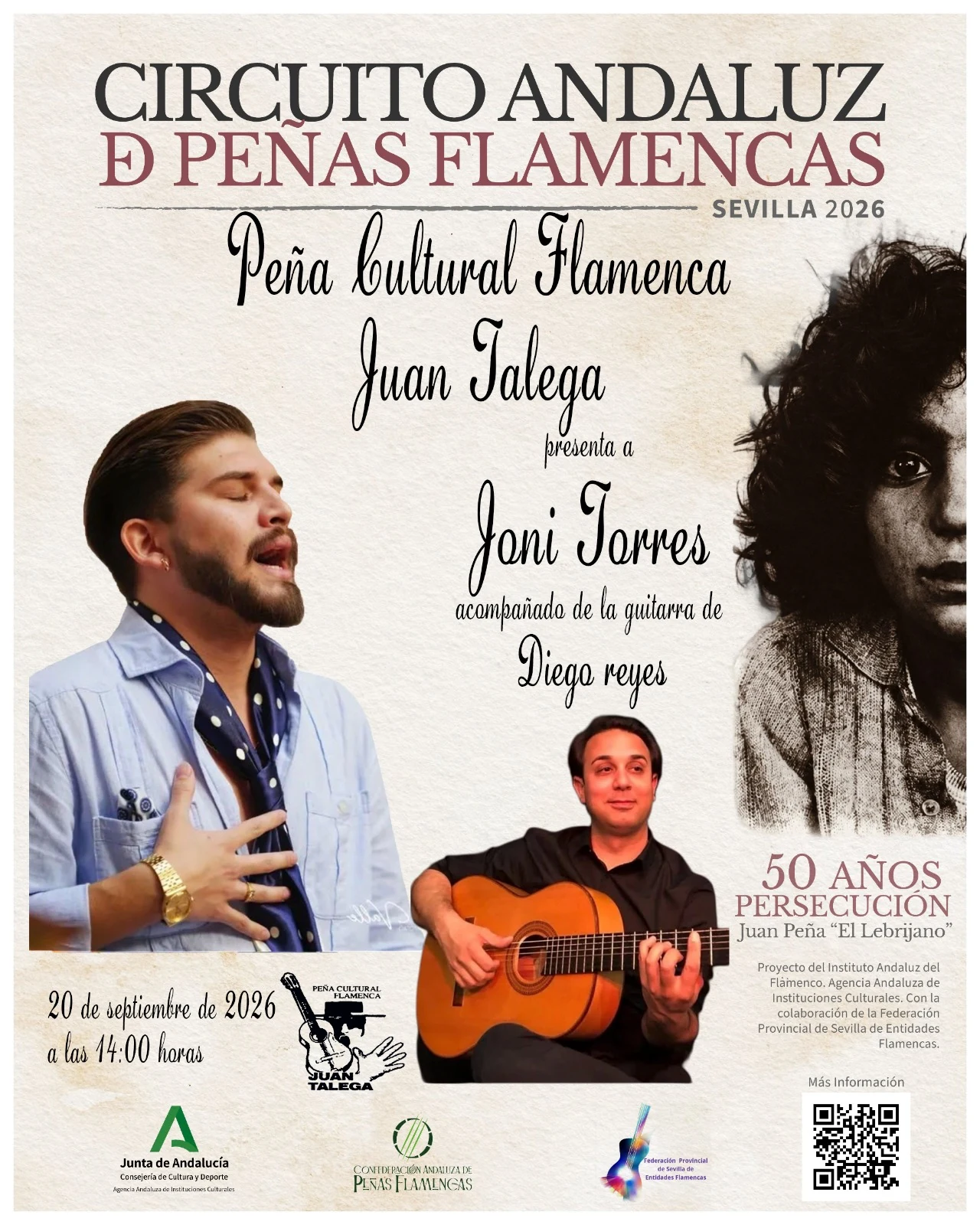
Andalusian Circuit of Peñas Flamencas Seville 2026 – Joni Torres in Flemish Cultural Rock Juan Talega 
XXIV Flamenco Biennial Sunday 20 September 2026 - Turina Space: 19:00 hours
13.50€
|
4 events,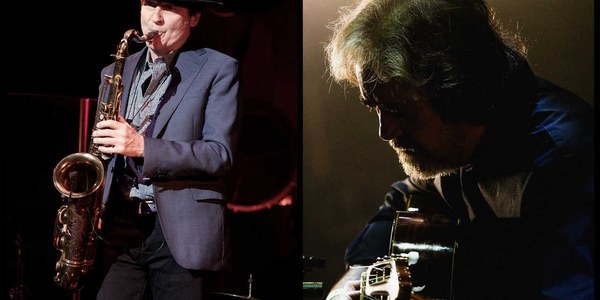
XXIV Flamenco Biennial Monday 21 September 2026 - Lope de Vega Theater: 20:00 hours
10€
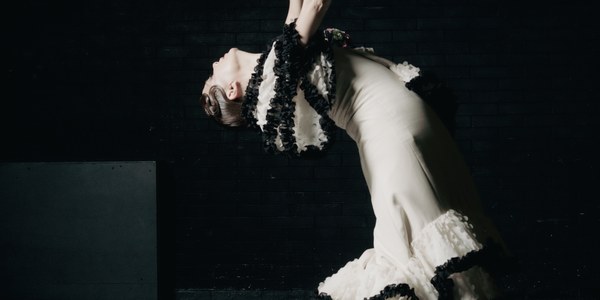
XXIV Flamenco Biennial OLGA PERICET Perspectives on a sound dance Direction, choreography and dance: Olga Pericet Original music and guitar: José Manuel León Cante: Mercedes Cortés Lighting design: Gloria Montesinos Sound: Curro Ureba Tailoring workshop: Lourdes Boán Photography: Jordi Terry Executive Production: Miquel Santín Distribution: Peineta Productions Collaboration in production: AAIICC…
27€
|
6 events,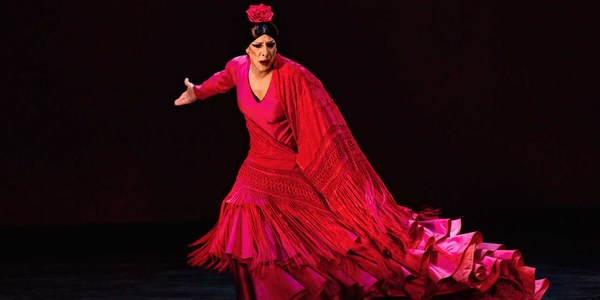
XXIV Flamenco Biennial Direction, choreography and dance: Manuel Liñán Guitar: Francisco Vinuesa Cante: Juan de La María, Jose Manuel Fernandez, Miguel Heredia and Manuel de la Nina and Sebastián del Puerto Guest artists Costumes: Ernesto Artilló Costume creation: Lidia Valle and Carlota Caro Lighting design: Gloria Montesinos A.a.i. sound design: Angel Olalla…
25.20€
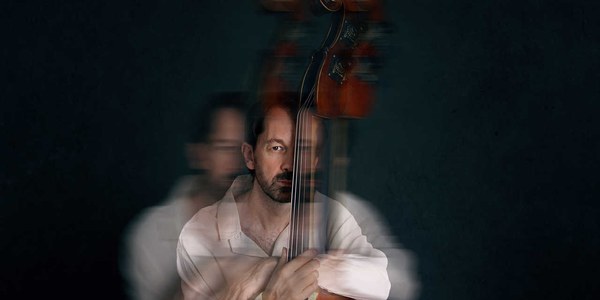
XXIV Flamenco Biennial The idea of making a trilogy did not arise from the first moment. After five albums dedicated to my compositions of what we could define Jazz Flamenco, the need arose to make a covers album. My career having been so closely linked to maestro Gerardo Núñez, the idea arose naturally…
27€
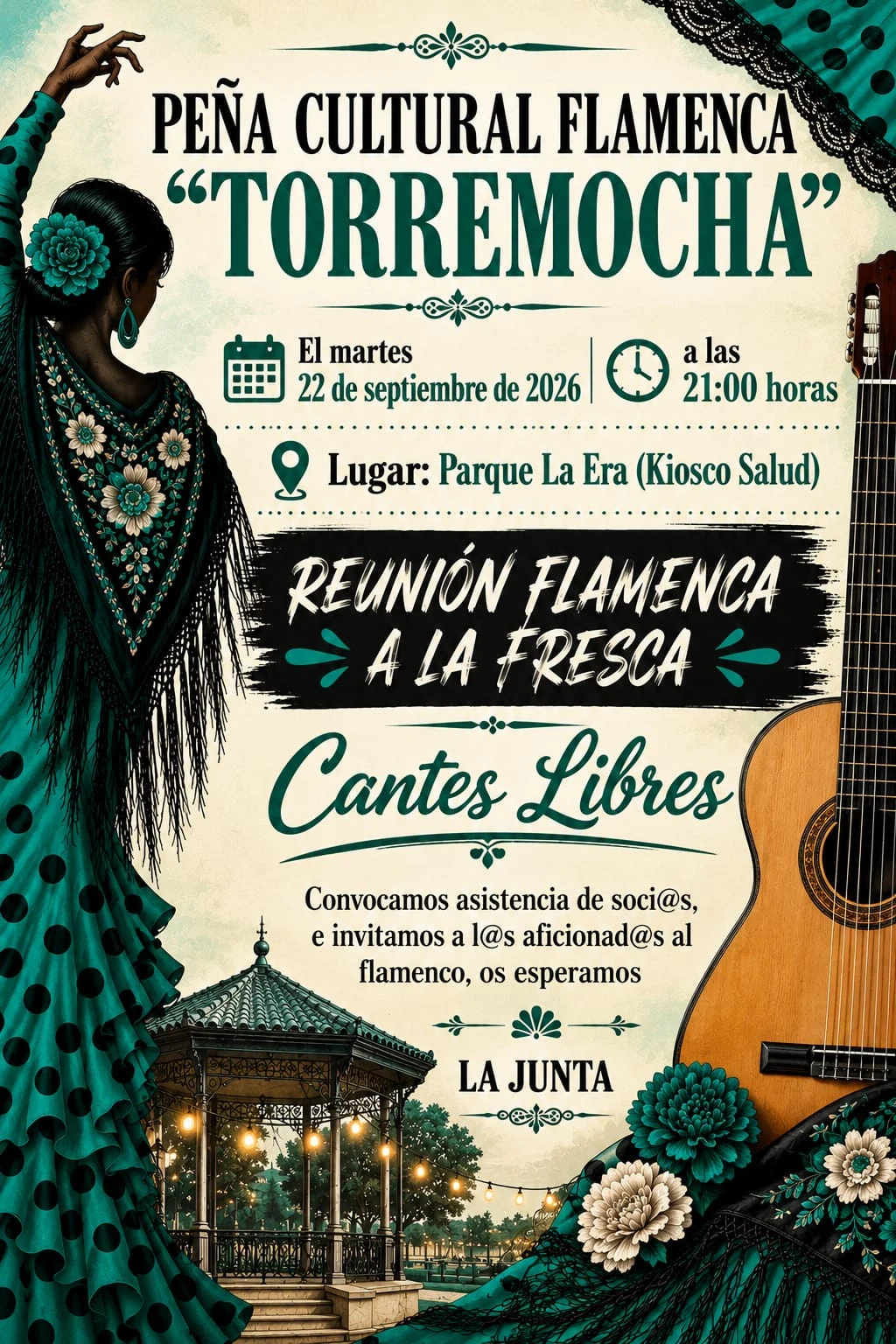
Flamenco a la Fresca Meeting – Cantes Libres in Parque La Era (Health Kiosk) |
5 events,
XXIV Flamenco Biennial The idea of making a trilogy did not arise from the first moment. After five albums dedicated to my compositions of what we could define Jazz Flamenco, the need arose to make a covers album. My career having been so closely linked to maestro Gerardo Núñez, the idea arose naturally…
27€

XXIV Flamenco Biennial Wednesday 23 September 2026 - Central Theater: 22:30 hours |
6 events,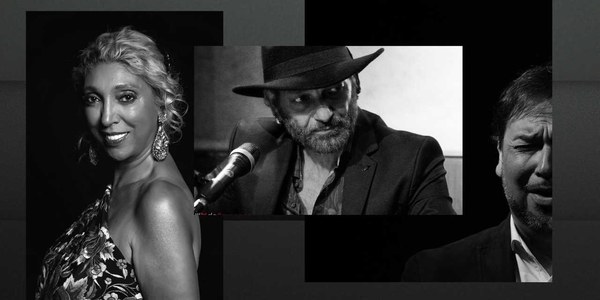
XXIV Flamenco Biennial A CANELA Y CLAVO Esperanza Fernández, Duquende and José Valencia. Address. Pedro Peña Address: Pedro María Peña Cante: Esperanza Fernadez, Duquende and José Valencia Dance: Pepe Torres and Nazaret Reyes Guitars: Joni Jiménez and Juan Requena Flute: Juan Parrilla Double Bass: Gal Maestro Violin: Leslie Jordan Percussion: Paco Vega Choirs and Palms:…
25.20€
XXIV Flamenco Biennial The idea of making a trilogy did not arise from the first moment. After five albums dedicated to my compositions of what we could define Jazz Flamenco, the need arose to make a covers album. My career having been so closely linked to maestro Gerardo Núñez, the idea arose naturally…
27€
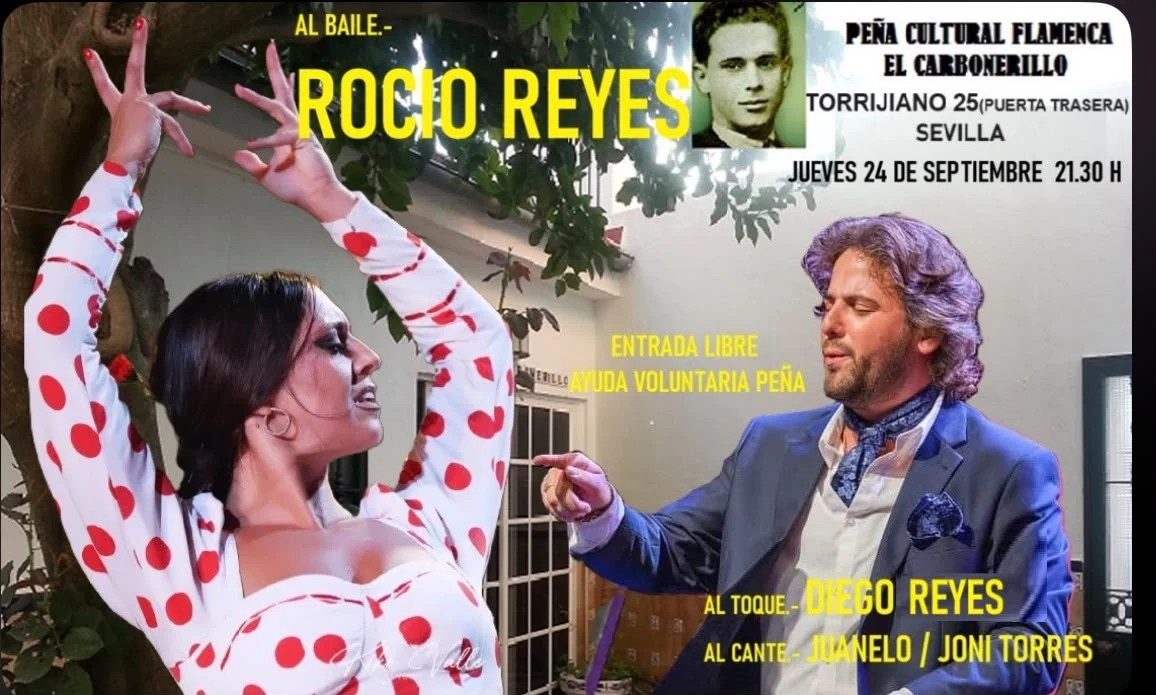
Rocío Reyes – Peña Cultural Flamenca El Carbonerillo at Peña Cultural Flamenca El Carbonerillo (Torrijiano 25, back door)
Free
|
10 events,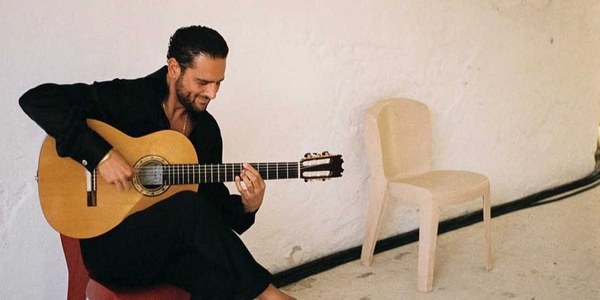
XXIV Flamenco Biennial The guitar of Diego del Morao, on the stage that the Seville Biennial dedicates to the six strings, find your space to shine alone. His hands and feet become the architects and sorcerers of the concert, tracing a narrative of personal rhythm, recognizable and unique. accompanying him, its characteristic…
13,50€
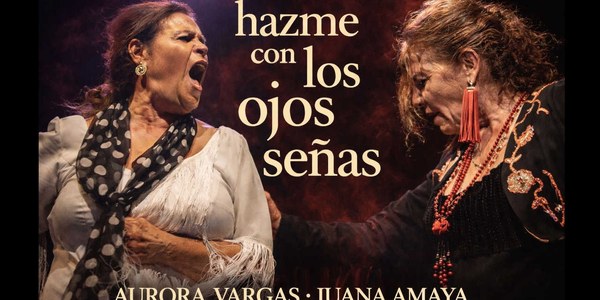
XXIV Flamenco Biennial Make me with your eyes signs is a statement by two women whose gaze is a manifesto of strength and truth. Aurora Vargas embodies grace and singing born at home. your voice, deep and with a pinch of history, does not interpret flamenco: she is flamenco. Each complaint springs from…
10€
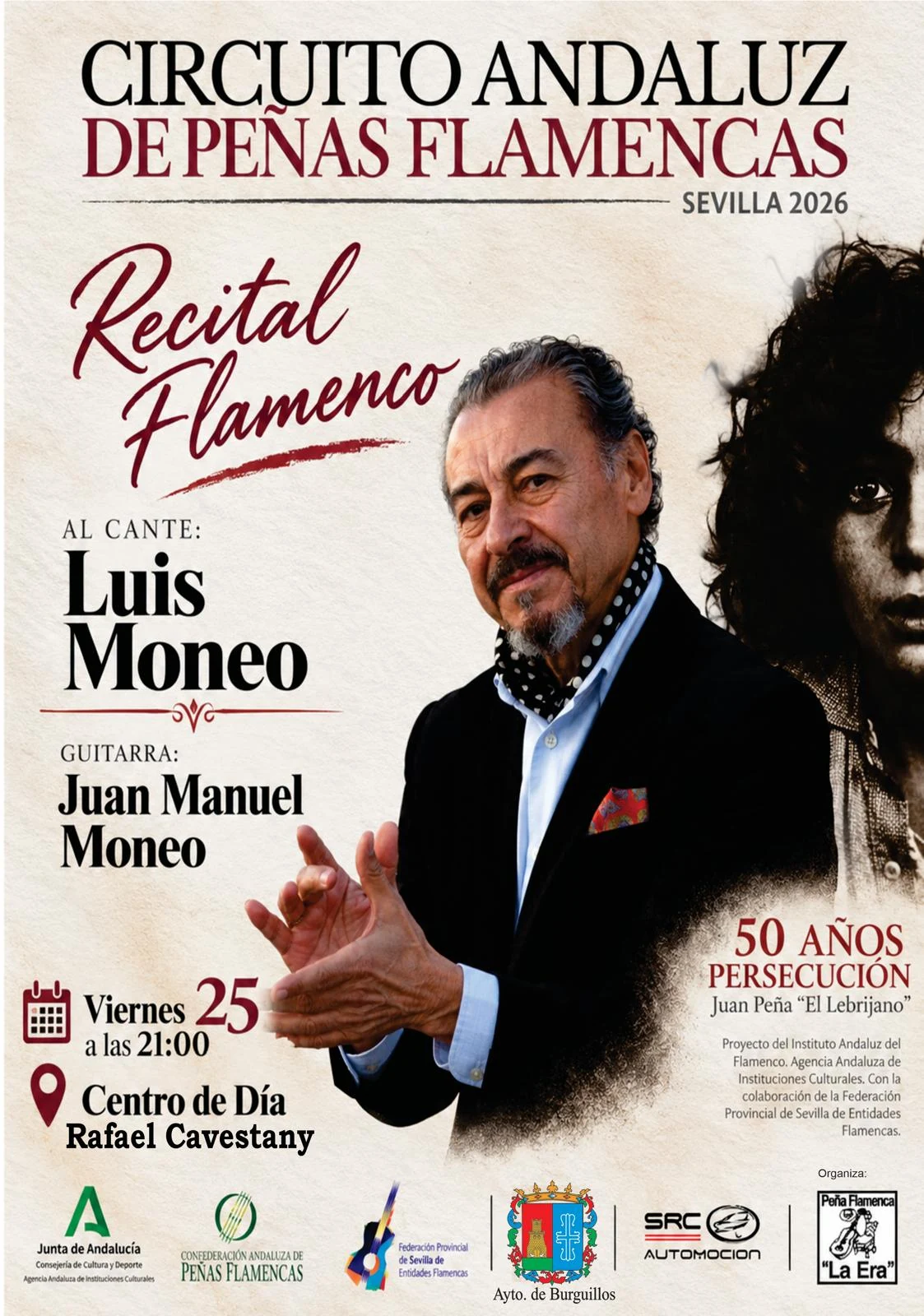
Flamenco Recital – Andalusian Circuit of Peñas Flamencas Seville 2026 at Rafael Cavestany Day Center |
12 events,
XXIV Flamenco Biennial Encarna Ring - Pituquete voice - guitar and composition Roberto Jaén - palms Diego Montoya - palms Collaboration Miguel Rincón - Lute and Theorbo (to be defined) Saturday 26 September 2026 - Church of Saint Louis of the French: 12:00 hours 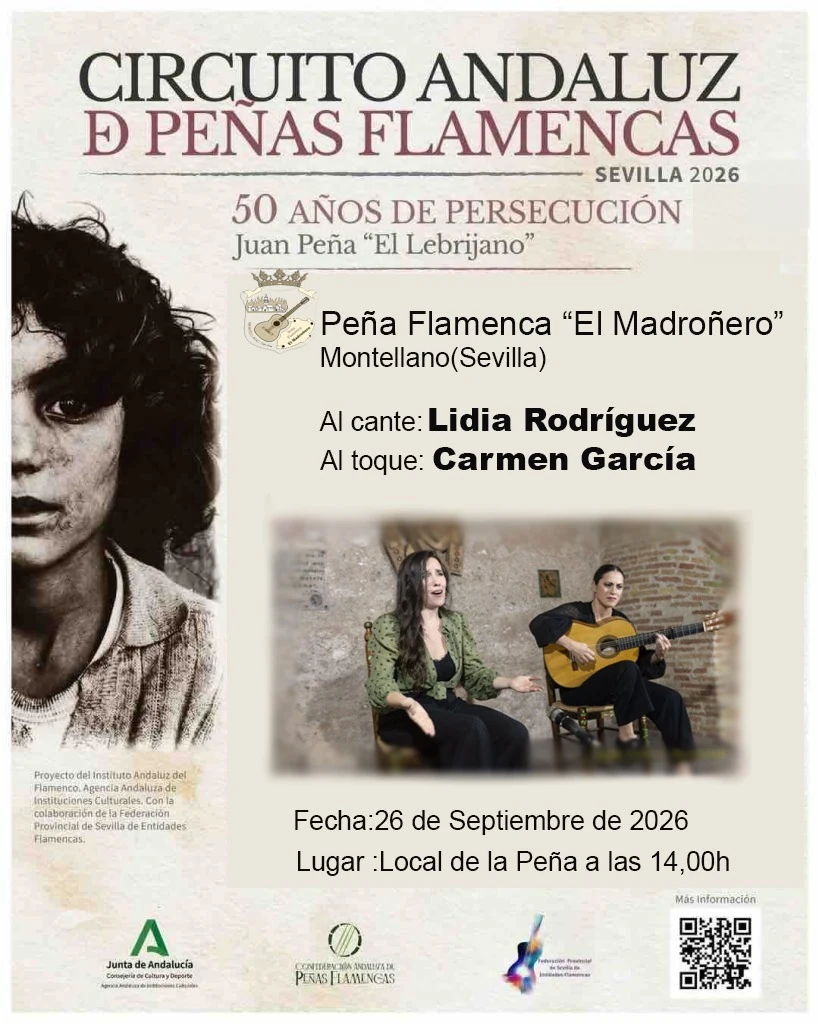
Andalusian Circuit of Peñas Flamencas Seville 2026: Flamenco Club "The Strawberry Tree" at Peña Flamenca premises "The Strawberry Tree" |
9 events,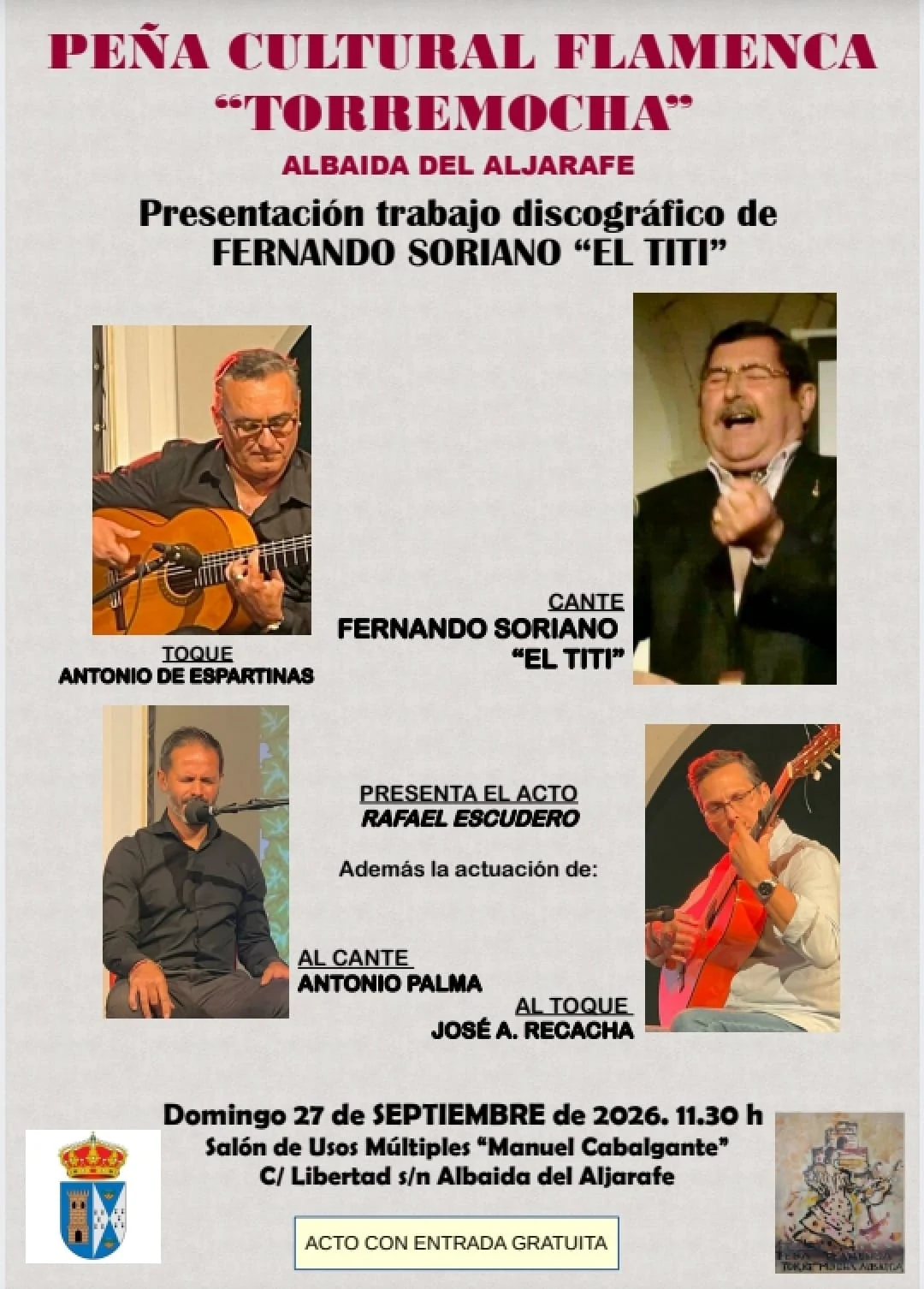
Presentation of Fernando Soriano's recording work "The Titi" in Multipurpose Room "Manuel Cabalgante" (C/ Freedom s/n)
Free
XXIV Flamenco Biennial Sunday 27 September 2026 - Church of Saint Louis of the French: 12:00 hours 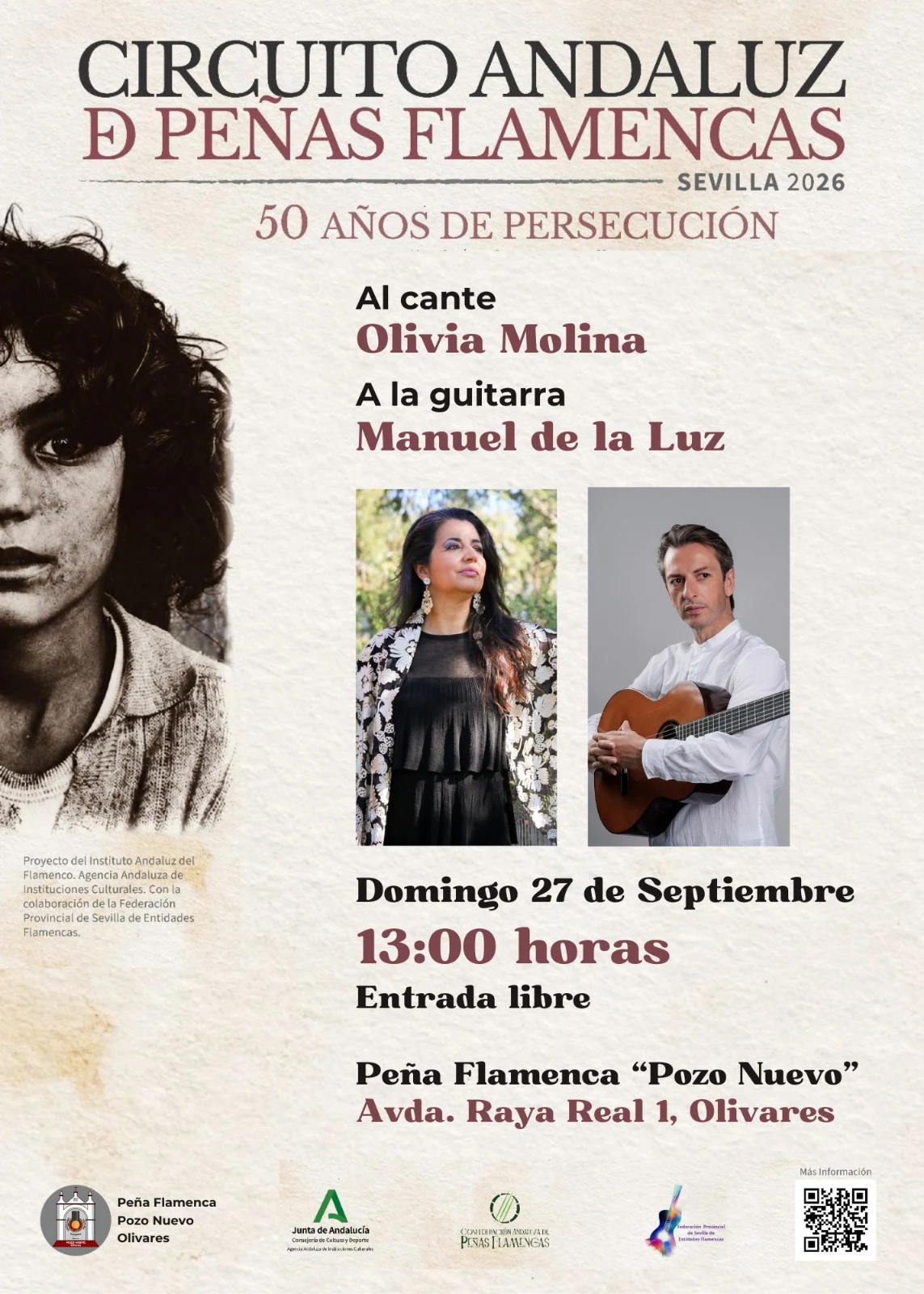
Andalusian Circuit of Peñas Flamencas Seville 2026 – 50 years of persecution in Peña Flamenca "New Well" (Avda. Royal Stripe 1)
Free
|
4 events,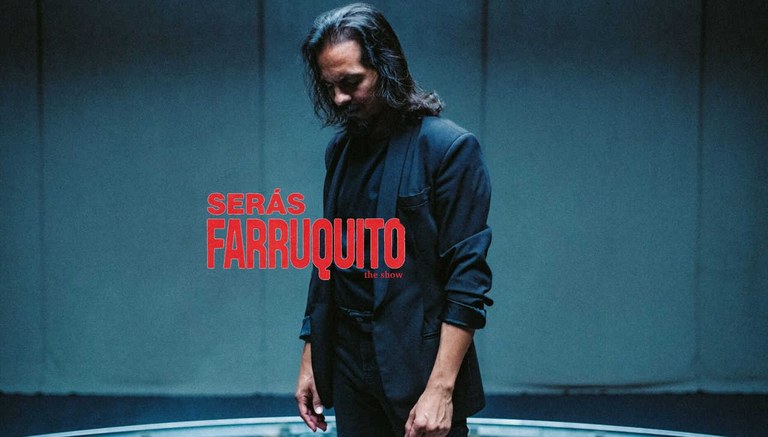
XXIV Flamenco Biennial Monday 28 September 2026 - Maestranza Theater: 20:00 hours
25.20€
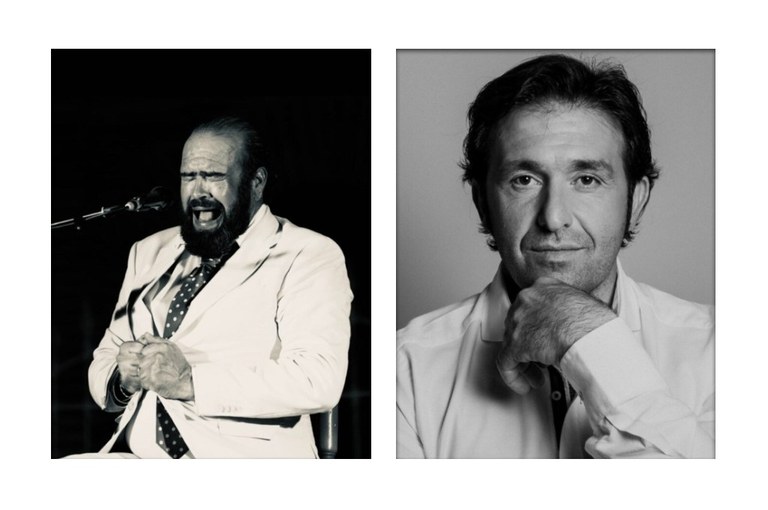
XXIV Flamenco Biennial Monday 28 September 2026 - Alameda Theater: 22:30 hours
27€
|
4 events,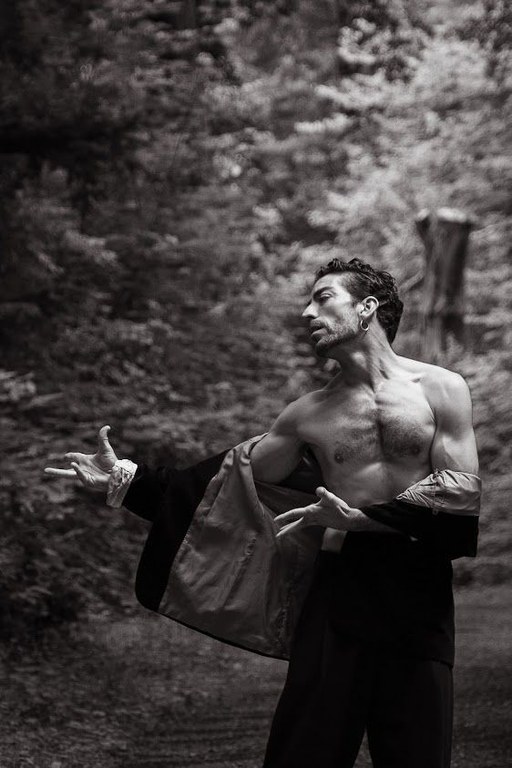
XXIV Flamenco Biennial Tuesday 29 September 2026 - Lope de Vega Theater: 20:00 hours
10€
XXIV Flamenco Biennial Tuesday 29 September 2026 - Central Theater: 22:30 hours
27€
|
5 events,
XXIV Flamenco Biennial Wednesday 30 September 2026 - Lope de Vega Theater: 20:00 hours
10€

XXIV Flamenco Biennial Flamencos do not go to the barbershop, it is a declaration of freedom: the mane as a symbol of freedom and singing without cuts. Here you sing bareback, with truth and character. Two unique figures of Jerez singing, survivors of a golden age, in which the night and…
27€
|
5 events,
XXIV Flamenco Biennial Thursday 1 October 2026 - Maestranza Theater: 20:00 hours
25.20€
-
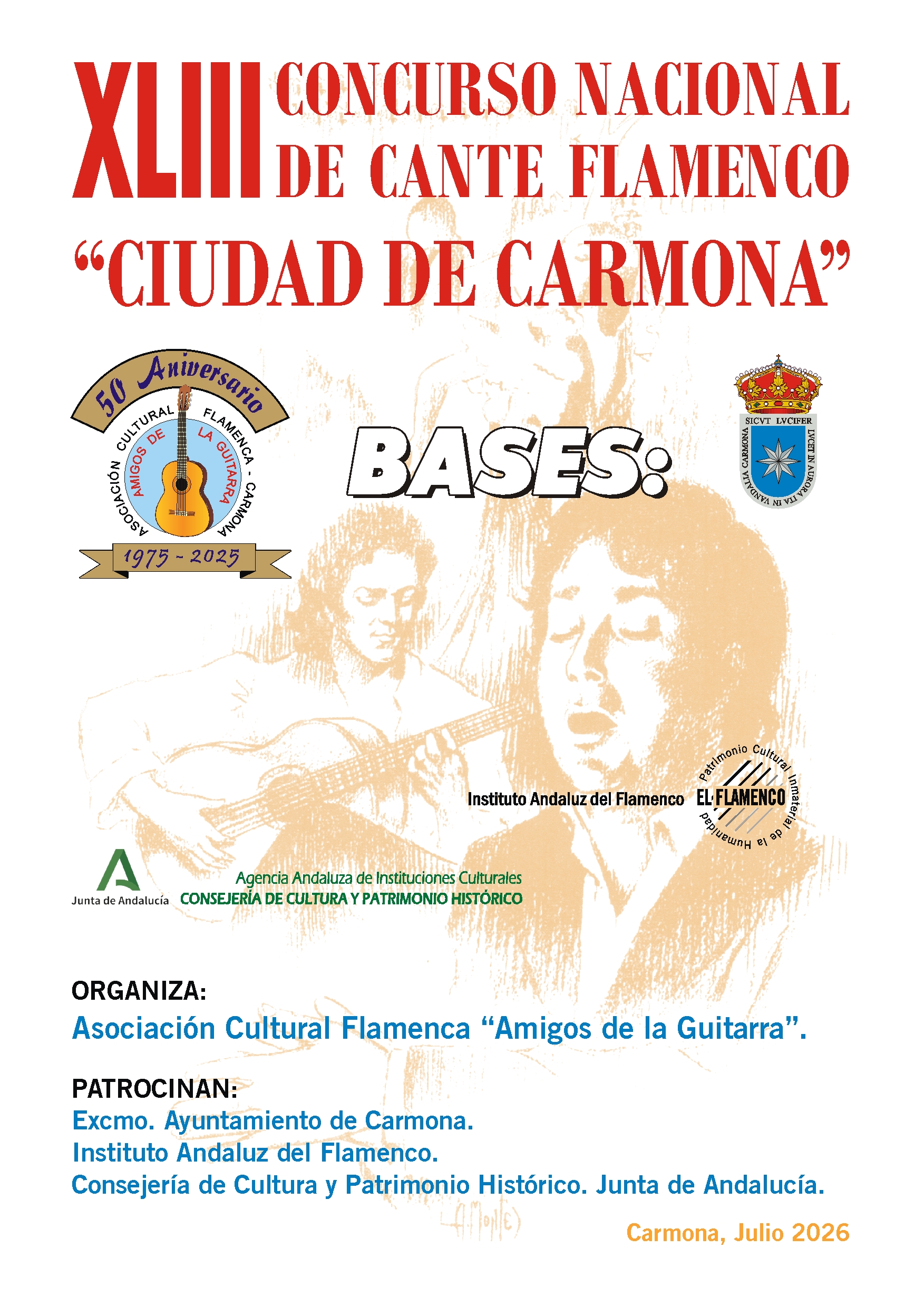
XLIII edition of the “Ciudad de Carmona” National Flamenco Singing Competition, with two sections—General and Youth—and registrations open until 12 September.
Free
XXIV Flamenco Biennial Thursday 1 October 2026 - Alameda Theater: 22:30 hours
27€
|
9 events,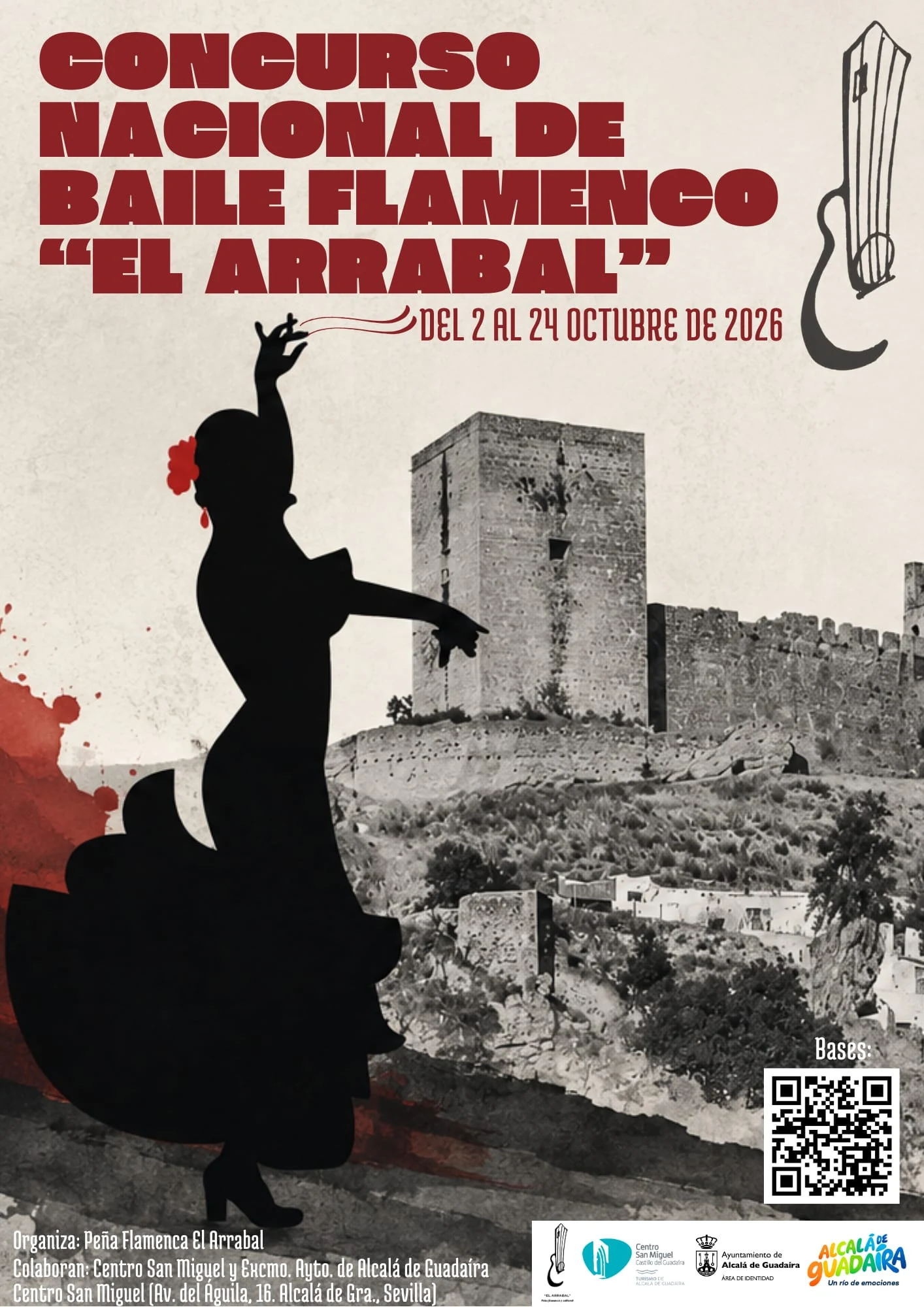
National Flamenco Dance Competition "The Suburb" in San Miguel Center (Of. of the Eagle, 16)
Free
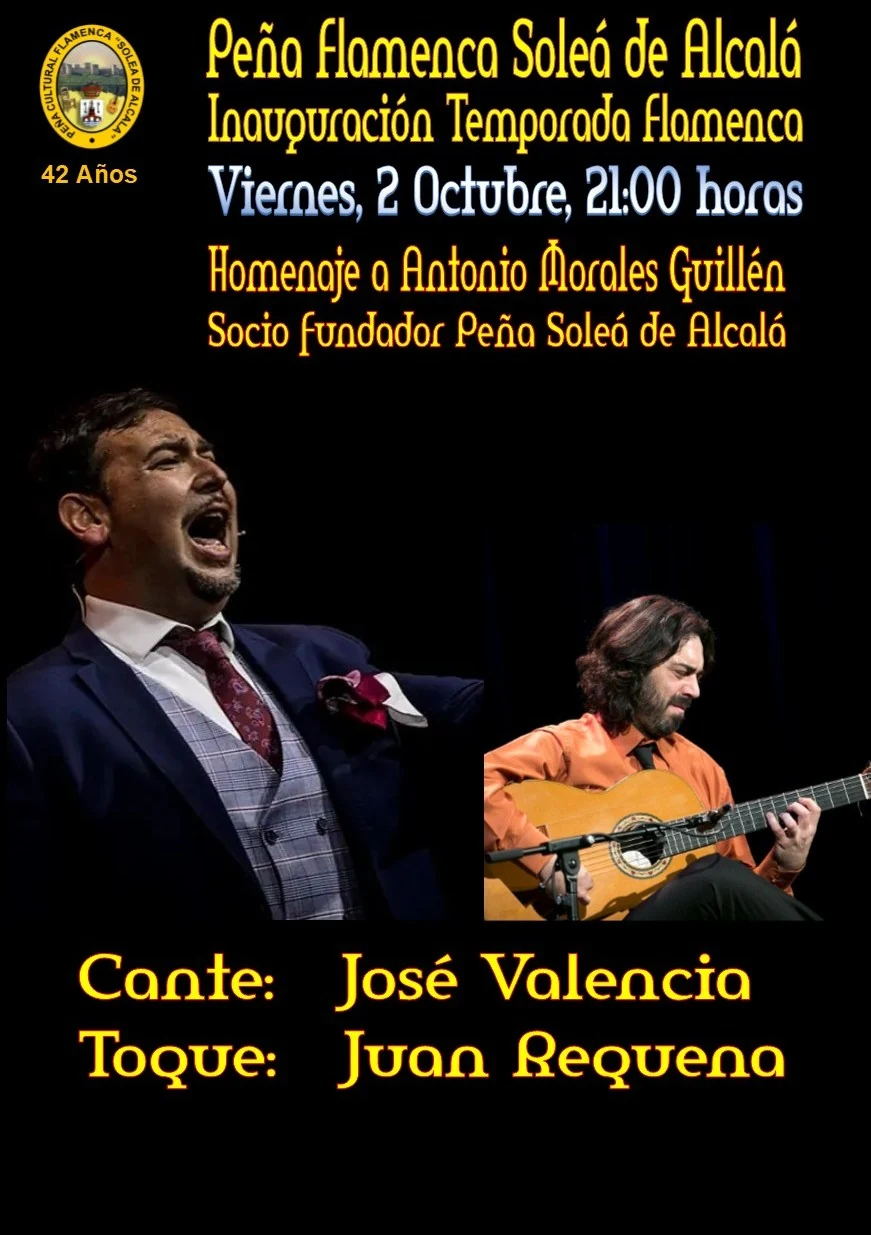
Flamenco Season Inauguration – Tribute to Antonio Morales Guillén at Peña Flamenca Soleá de Alcalá |
11 events,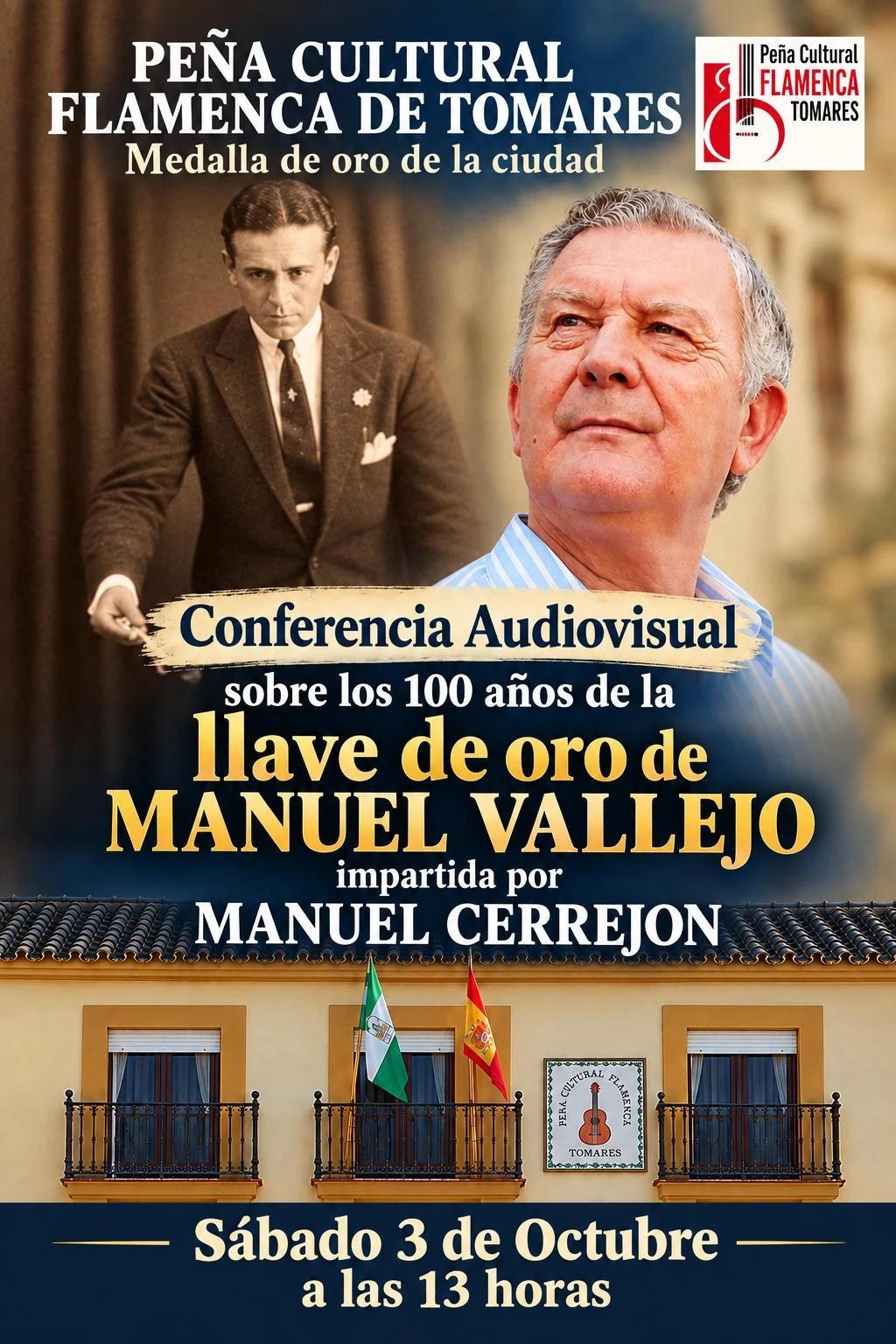
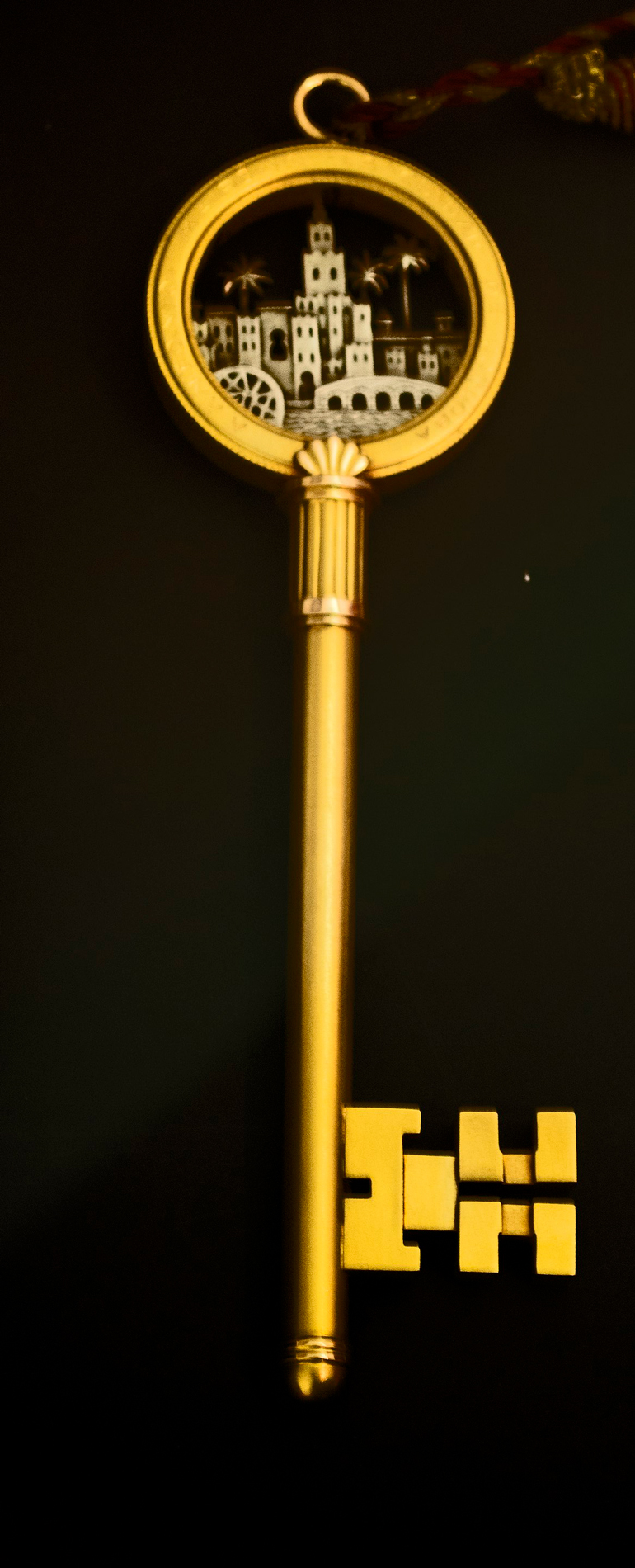
Audiovisual Conference on 100 years of Manuel Vallejo's Golden Key in Tomares
-
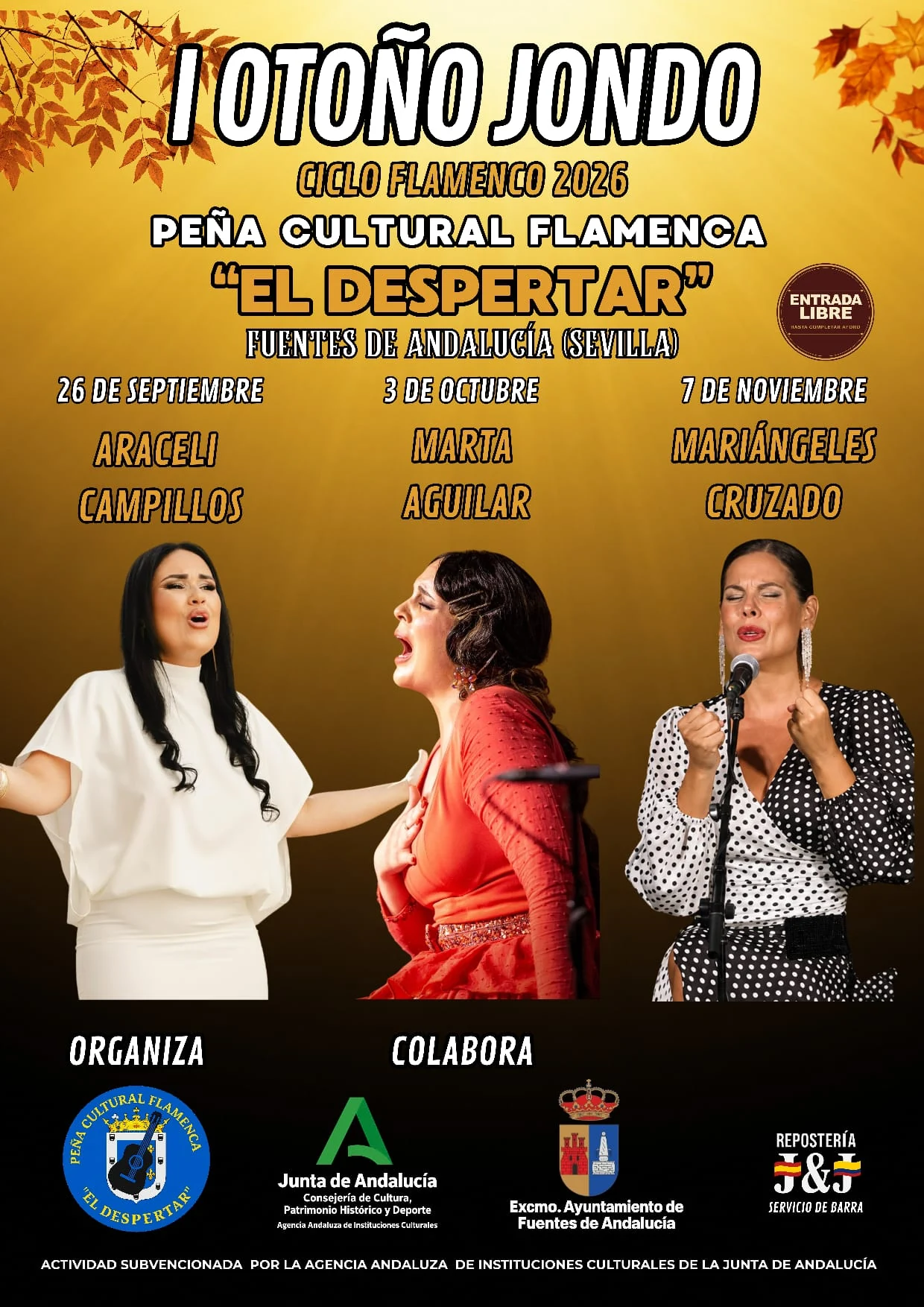
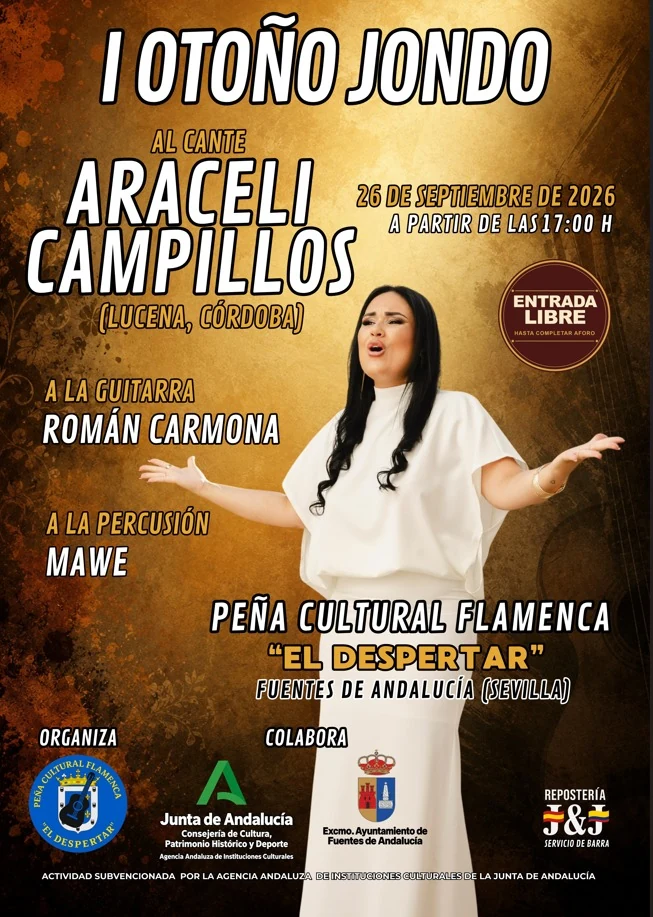
I Autumn Jondo – Flamenco Cycle 2026: Marta Aguilar in Fuentes de Andalucía
Free
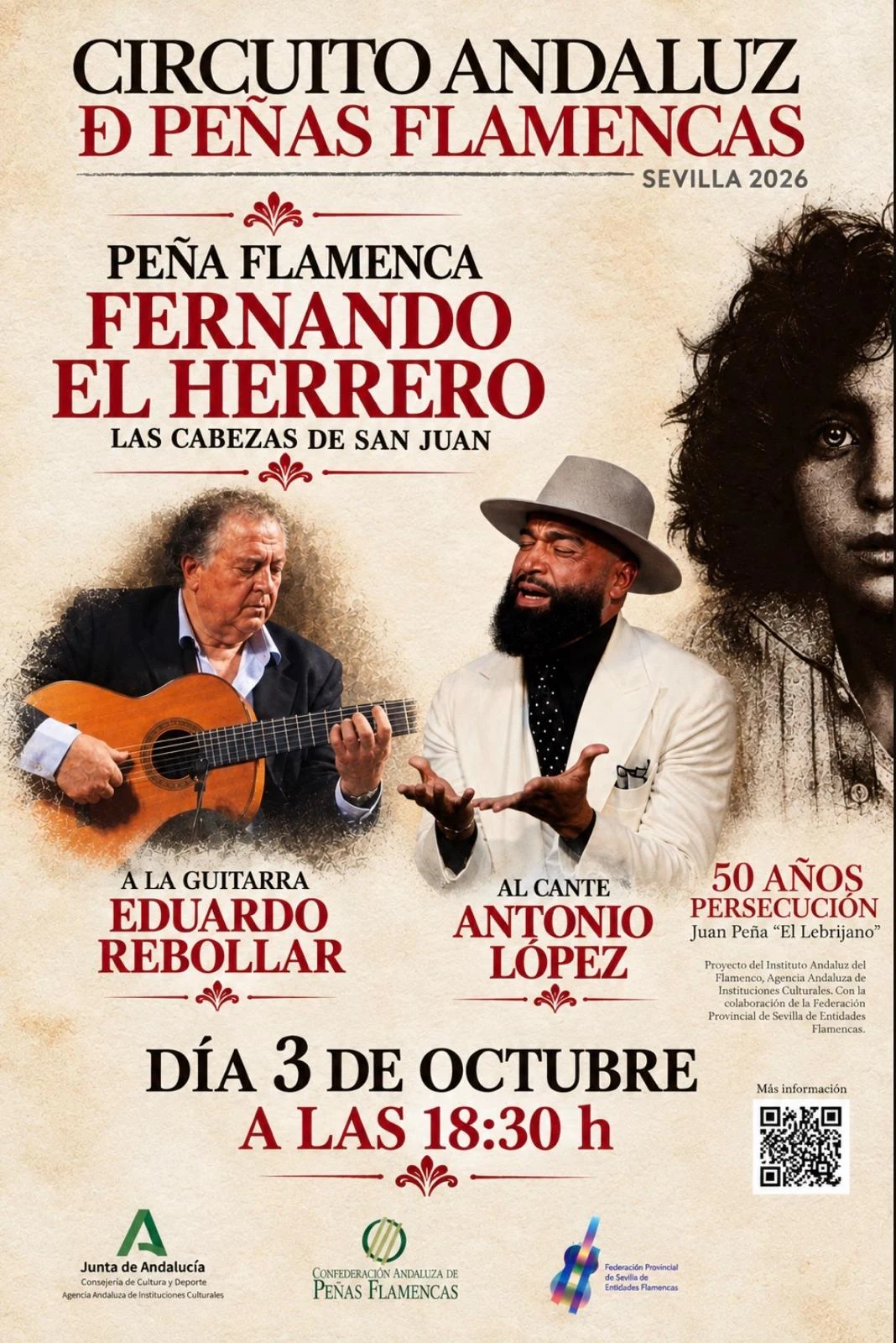
Andalusian Circuit of Peñas Flamencas – Peña Flamenca Fernando el Herrero in Peña Flamenca Fernando el Herrero |
4 events,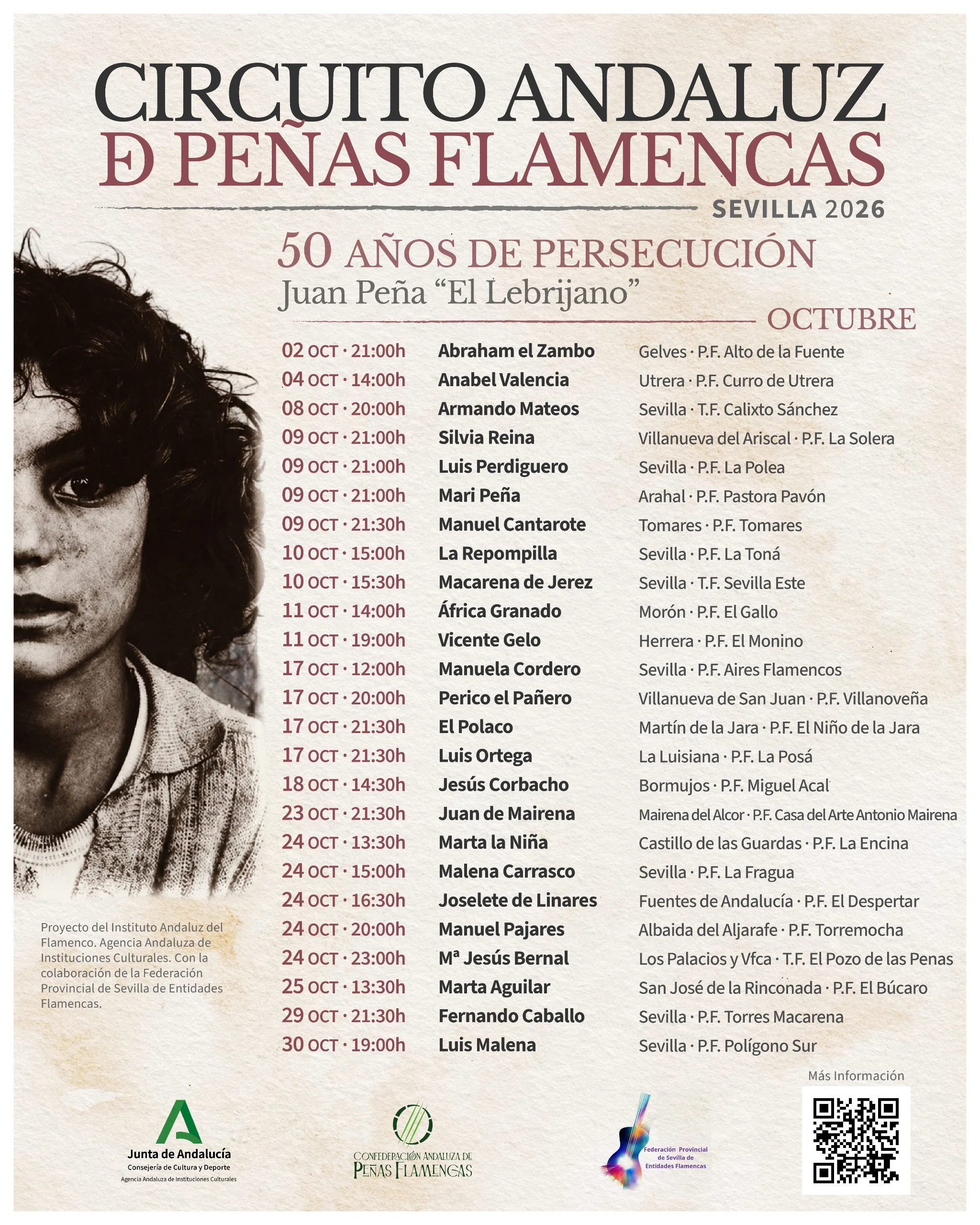
Andalusian Circuit of Peñas Flamencas Seville 2026 – Anabel Valencia at Peña Flamenca Curro de Utrera |
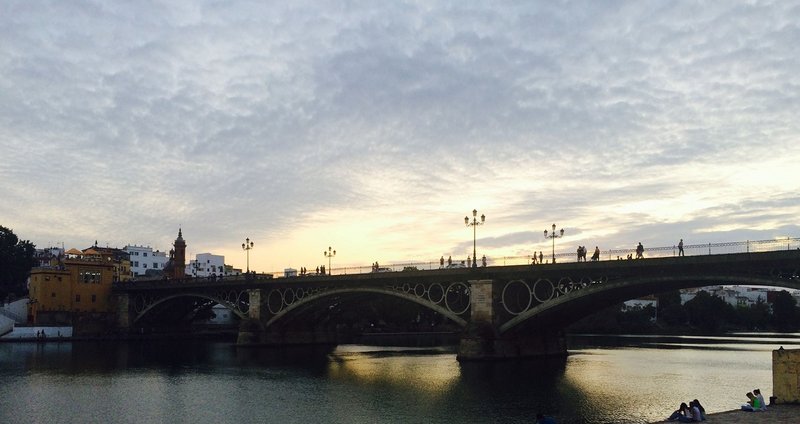 Sevilla
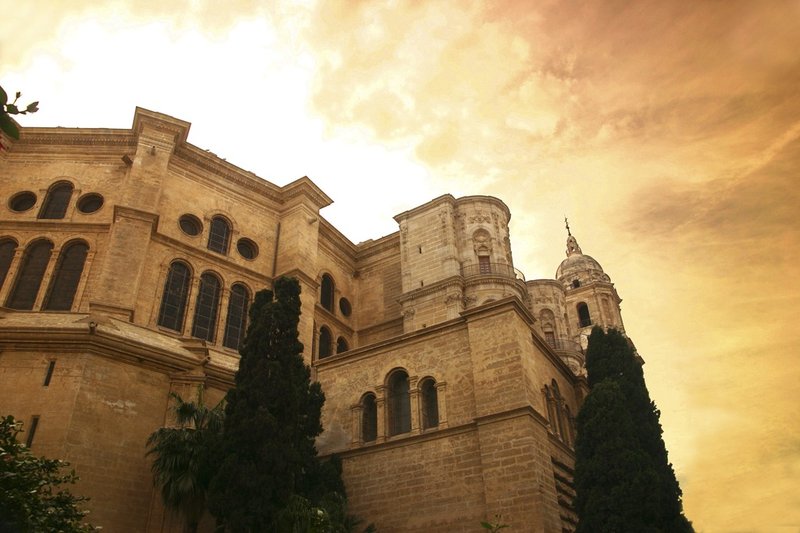 Málaga
 Jaen
Jaen Huelva
 Granada
 Córdoba
 Cadiz
Cadiz Almeria
 A tourist and cultural vision of flamenco
 The Guitar, last to join.
 The history of flamenco with respect to its geographical distribution
 The present and future of the genre. The Fourth Golden Key of Singing.
 The festivals
The first flamenco festivals in history were created a little before Mairena won the third Key, but they took on real importance in the light of this event, that gave a transcendental push to the new values. The dance is represented by figures such as Antonio Gades, Mario Maya, Farruco, The Güito, Matilde Coral, Cristina Hoyos, Manuela Carrasco, Angelita Vargas, Maleni Loreto and Antonio already in his last stage. The singing features artists of the stature of those mentioned in the previous section.. And the public wants to see something serious, because the Franco regime had made excellent propaganda about the genre. So, in 1957 Gypsy Potaje de Utrera is born, the first of the flamenco festivals. Other events such as Arcos de la Frontera follow in its wake. (1961), the Mairena del Alcor Flamenco Songs and Singing Festival (1962), the Great Cante Grande Festival of Écija (1962), The Andalusian Gazpacho from Morón de la Frontera (1963), the Caracola of Lebrija (1966) or the Marchena Guitar Festival (1967). They are all celebrated in summer, in large, open spaces, Therefore, a hiring circuit is created that intensifies the work of artists in the summer season..
Nevertheless, During the winter artists carry out another vital task: bring flamenco to intellectual circles. From the hand of singers like Antonio Mairena, Andalusian music fully enters universities, recitals illustrated with conferences begin to be lavished, The word “flamencologist” is born and flamenco undergoes an important historical revision. All of this comes together in the conception of a new type of long-term festivals., like the Seville Biennial, most current artistic model today.
 Revaluation of flamenco. Third Golden Key of Singing
With “Flamenco Opera” as the common thread of the genre, the 50. 's arrive. Flamenco art is known throughout the world thanks to the “troupes”, which had reduced the density of the songs to facilitate understanding by all audiences. However, as if it had remained dormant, a generation of singers claimed their place and continued to perform the traditional styles in smaller groups. The figures of Juan Talega take special prominence at this moment, Fernanda and Bernarda de Utrera, Fosforito, The chocolate, Laces, Rafael Romero El Gallina and Antonio Mairena, among others. It's the time of the tablaos. The Hispavox house publishes the first “Anthology of Flamenco Art”, directed by the Jerez guitarist Perico el del Lunar. In 1958 The Jerez Flamencology Chair is created. The La Platería de Granada clubs emerge, Juan Breva in Malaga and Los Cernícalos in Jerez. Y, above all, in 1956 The First National Flamenco Art Competition is held in Córdoba, conceived by local poet Ricardo Molina, which Antonio Fernández Díaz from Pontan won, Fosforito. Flamenco enters theaters and artists insist on recording old songs that are out of use to perpetuate their art.
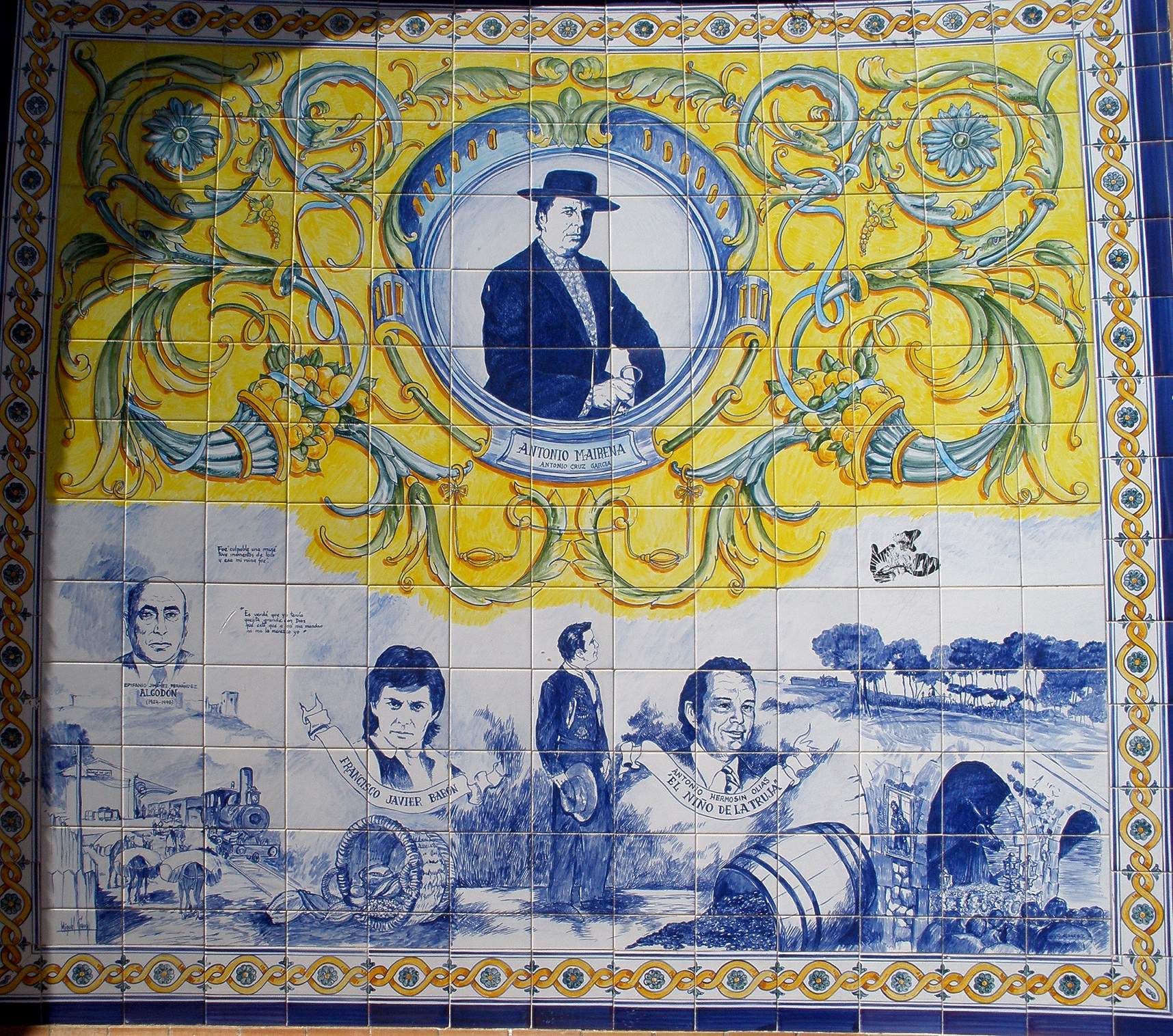
In all this context, the genre once again suffers another turning point. Manuel Vallejo died in 1960, The organizers of the Córdoba contest decide to put the Golden Key of Cante into litigation again. Thus, the city of the Mosque welcomes 1962 a historic competition, whose jury included personalities such as Ricardo Molina or Juan Talega. The trophy was disputed by Fosforito, The chocolate, Juan Varea, Pericón, Platero de Alcalá and Antonio Mairena, who emerged as the winner on a transcendental night for the future of this art.
Antonio Cruz García, who until then had dedicated his life to singing back for dancers like Antonio Ruiz Soler, founded, with the key in hand, a school that endures to this day. He was the executor of a new generation of singers committed to Mairenismo to the core.. It is time for the emergence of El Lebrijano, Malena Work, The Nougat, Jose Menese, Miguel Vargas, Diego Clavel, José de la Tomasa or Calixto Sánchez. However, as had happened in all the previous stages, This pole finds its opposite in Cádiz and its bay: Shrimp, Juan Villar, Rancapino, Pansequito and, above all, a veteran Chano Lobato offer another complementary perspective that greatly enriches the genre., in addition to the contribution of other teachers as contrasting as José Mercé or Carmen Linares. Flamenco takes another path: the one of the festivals.
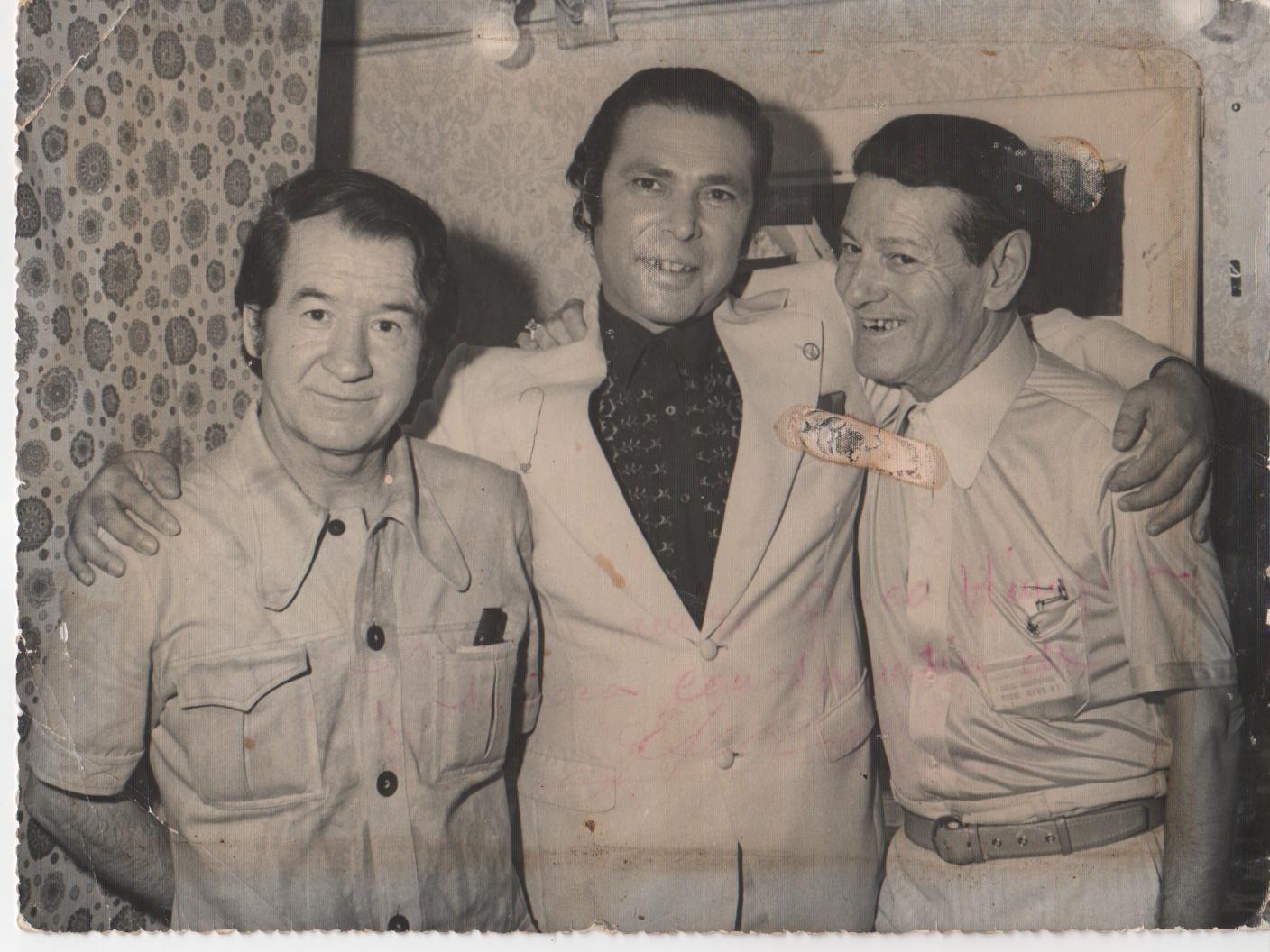 The Flamenco Opera
In the 20 's, the posters announcing the shows began to be stamped with a controversial label: “Flamenco Opera”. The term has not yet been accepted by many experts, because according to them this era represented an adulteration of flamenco styles, since the majority of singers left aside such fundamental styles as the soleá, the seguiriya, the tona, tango or bulería, to fully dedicate himself to fandango, to the back-and-forth styles and the cuplés. And certainly many “fandanguilleros” emerged in these years., but we must not forget that in this "boom" figures such as Juan Valderrama were also created - greatness connoisseur of all styles -, Pepe Marchena - who, despite the fact that some sectors do not like it, recorded all the things -, Snail -idem of the same- o, how not, Pastor Pavón Cruz, creator of a school that is still revered today, although other artists such as Porrina de Badajoz also gained prominence., Angelillo and José Cepero.
In reality, that operatic title only responded to the need to attract audiences to the theaters and the singers did nothing but satisfy the demands of the respectable, who preferred the sentence of a fandango to the depth of a seguiriya. In reality, the invention of the title “Flamenco Opera” is due to the most important businessman of the time., Mr. Vedrines, who, together with his brother-in-law Alberto Montserrat, took advantage of a tax provision of 1926. According to the aforementioned provision, public shows, like the varieties and the singing cafes, they had to pay a 10 percent, while instrumental concerts and opera only contributed three percent. This difference from 7 percent led Mr. Vedrines to call the shows “Flamenco Opera”, in a clever commercial trick that opened flamenco to large spaces: the bullrings were booming. And also the dance, which has figures of the stature of Antonia Mercé la Argentina, Pastor Empire, Vicente Escudero, and Encarnación López the Argentinian, a generation that would be followed by that composed of Pilar López, Carmen Amaya and Antonio.
Finally, singing sees artists like Aurelio Sellés from Cádiz progress, Pericón, The Pearl of Cádiz, The Arrow, Macandé and Manolo Vargas or the Jerezians Terremoto, The Deafness, María Soleá and La Paquera.
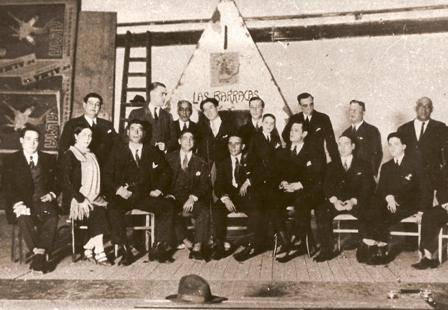 Flamenco in Madrid. The Pavón Cup. Second Golden Key of Singing
The success that flamenco singing had achieved among the public made the capital, Madrid, became a singing center from the beginning of the 20th century. Most of the renowned artists decided to settle in “La Corte” to give meaning to their artistic career and shows began to proliferate in theaters.. Taking advantage of the impact of the first contest of the 22 in Granada, the businessman of Madrid's Teatro Pavón, located on Embajadores street, decided to create the so-called Pavón Cup, an award that would serve to increase the prestige of the award-winning singer. The final was held on 24 of August of 1925 and the participants were Niño Escacena, Pepe Marchena, the Lame of Malaga, El Mochuelo and Manuel Vallejo, who would be the undisputed winner of the contest. However, a year later things changed. The winner was Manuel Centeno, who played some magnificent saetas, but in everyone's mind it remained that it should have fallen back to Vallejo's side, so it was Don Antonio Chacón himself who decided, in reparation, deliver the Second Golden Key of Cante to the Sevillian maestro, who received the gift founded by Nitri from the hands of Manuel Torre.
All this paraphernalia, repeated on many occasions in different parts of Spain -although not with such repercussion-, generated what later became known as the Flamenco Opera, without a doubt the most controversial stage of the genre.
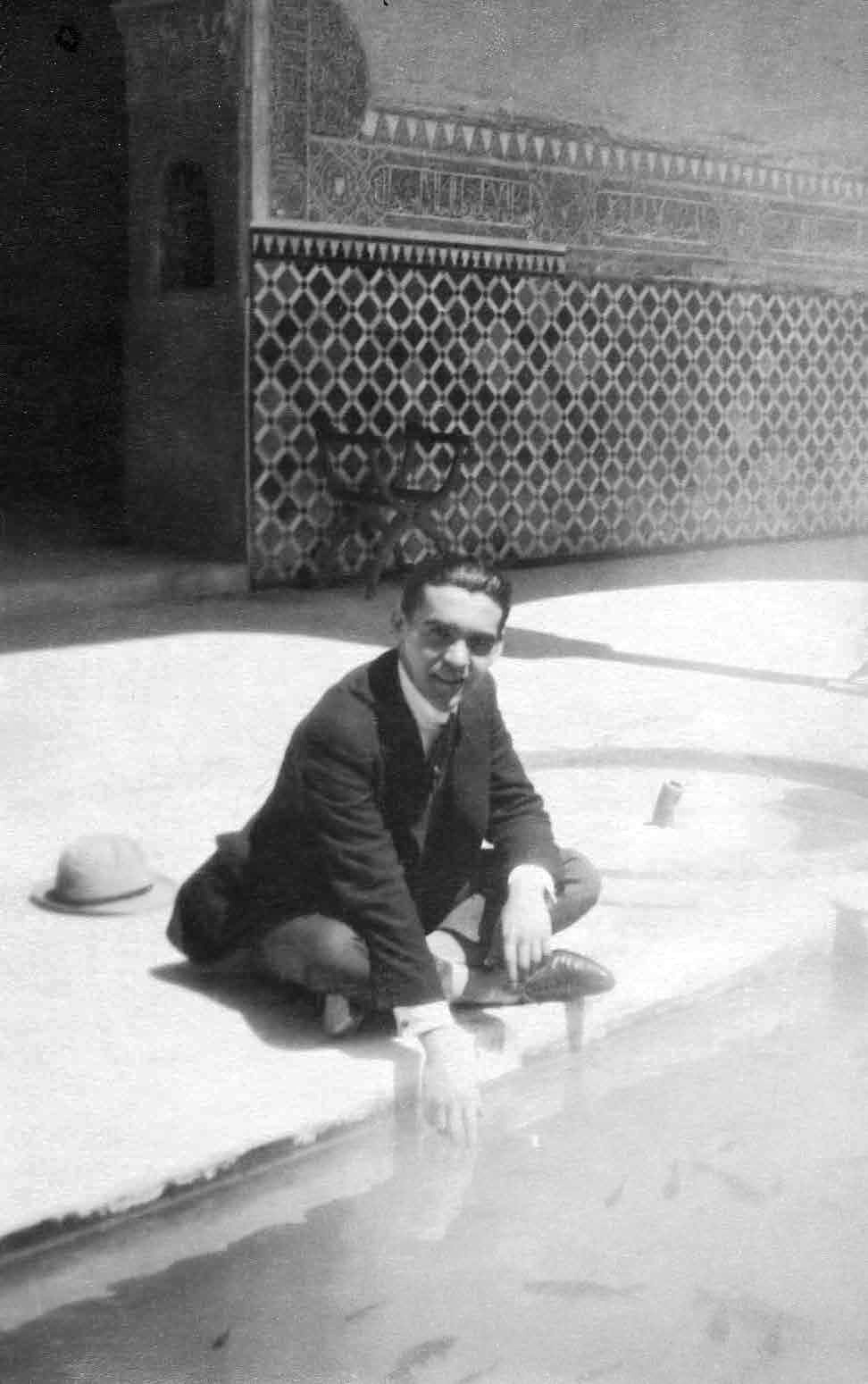 The contest that took place in 1922 in Granada
When singing professionals begin to emerge decisively, the dance and the touch,
certain sectors of the intellectuality related to the Generation 27 begin to fear for “the pure”. Masters like Manuel de Falla or Federico García Lorca have an apocalyptic vision of flamenco, since for them this must be an art of the people, reduced to the Andalusian minority, and not a marketable style. The fear of the loss of what they call “purity” leads them to create the first flamenco singing competition, held in Granada in 1922, in which the only requirement was that the applicants be unknown, people from the town, and not figures already consecrated in the Cafés Cantantes. The contest was won by Diego Bermúdez Cala, from Morón, based in Puente Genil., “The Tongs”, and an honorable mention was given to a child from 13 years called Manuel Ortega Juárez, who in the end would turn out to be the famous Manolo Caracol.
But the claims of the creators of that contest did not prosper and, despite the efforts to return flamenco to the people, the genre not only continued to professionalize, but fans witnessed a revolution that grew with slate discs.
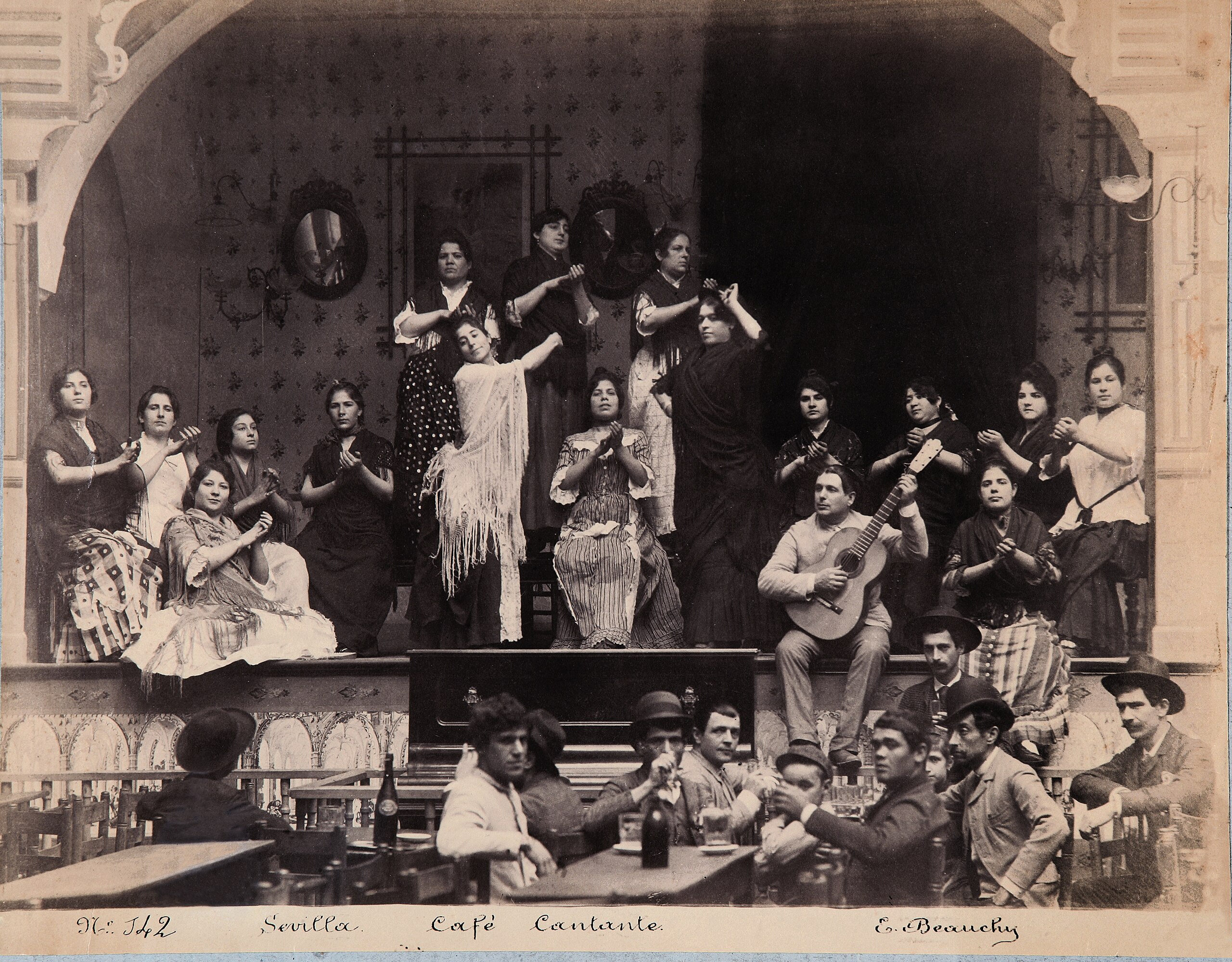 The great creators. The Golden Age. The Singing Cafes
At the end of the 19th century, flamenco was already a widespread art throughout Andalusia. In Cadiz, mother of singing by cantiñas, figures like El Chiclanita emerge, Dolores and Alonso del Cepillo, José de los Reyes and el Negro del Puerto and singing centers such as Los Puertos are certified, San Fernando, Sanlucar, Chiclana and Arcos.
Jerez de la Frontera deserves a special mention, another of the main points of flamenco, especially through the neighborhoods of Santiago and San Miguel. From there they are none other than Manuel Soto Loreto, The tower, and Don Antonio Chacón.
However, a little before these teachers broke in, the history of flamenco faces a key moment. Singers like Silverio Franconetti coincide at the same time., Tomás El Nitri and Juan Breva. Fierce competition arises between them, to the point where Nitri refuses to sing in front of Silverio so as not to look ridiculous in front of the teacher of Italian descent.. But, on the contrary, the first Golden Key of Cante in history goes to Tomás, who receives the award as a gift for his mastery during a party. All these circumstances could have lit the spark in Silverio, that upon seeing the passions that this art aroused, he decided to set up a Café Cantante in the number 4 from Rosario street in Seville. At the moment, flamenco becomes professional.
However, despite the pull that the aforementioned cafes have in society, a certain sector of the genre maintains the singing in the minorities of yesteryear. Is the case, For example, of the Gordos de Alcalá, a family of Triana origin whose greatest representative is, according to Antonio Mairena, Joaquín de la Paula, or later from Tío José de Paula y Agujetas el Viejo in Jerez.
At this time, Las Coquineras triumphed on stages throughout Spain., The Macarona, Don Antonio Chacón, Francisco Lema “Fosforito el Viejo” - main adversary of the maestro
Jerez-, the Perote, The Owl, The Macaca, The Diana, Cajetan Muriel the Goat Boy, The Canary, Ferdinand the Blacksmith, The Blonde of the Pearls or the Garrido of Jerez, among many others.
We are already in the 20th century. And in the years 20 an unmatched generation takes up the baton of art. The names of Pastora Pavón Cruz “La Niña de los Peines” are already beginning to be heard, Arturo and Tomás Pavón, Manuel Torre, Manuel Vallejo, The Glory, Las Pompis, Juanito Mojama, Bernardo of the Wolves, El Niño Escacena, Pepe the Matrona, Manuel Centeno, The Lame One of Malaga, Juan Varea, Pepe Pinto, Sebastian the Pena, the Child of Marchena, Manolo Caracol, Aunt Anica the Piriñaca, Uncle Gregorio the Borrico and Juan Talega.
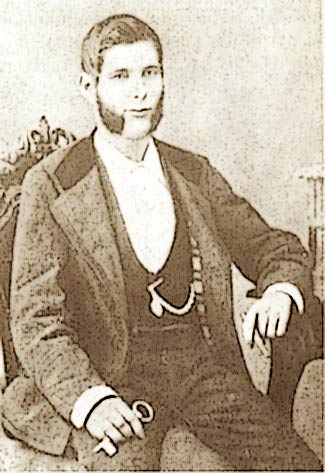 Evolution. Hermetic Stage. First singers
Aside from the keys that the history of literature has provided for the study of the origin of flamenco, there is data, many of it still unproven, that talk about ancient flamencos. The reference to two figures who for a long time have been thought to be the first singers in history cannot be left out.: Tío Luis de la Juliana and Junquito de Comares from Jerez, two names that have created many conflicts among flamencologists of yesteryear, since an agreement was never reached as to which of the two was prior to the other. Today that discussion has no relevance., since it still cannot be proven that they even existed.
However, Of those who do have reference to their existence, they are one of the first artists of the 18th century in Triana., which, together with Jerez and Cádiz, is the enclave in which flamenco ceases to be a folkloric expression and becomes an artistic genre.. must be cited, by
example, to singers like El Planeta, Although it seems that he was born in the Bay of Cádiz area - it is believed that in Puerto Real -, He developed all his art in the Sevillian suburbs singing seguiriyas - of his own creation- and by tonas. His main student was El Fillo, gypsy also from Cadiz lands who had a love relationship with Andonda, who was many years apart. This woman was probably the first to sing soleá, although there were also other cantaora families in Triana such as the Pelaos and the Cagancho to whom this style can be attributed.. At first soleá emerged as a dance song, until the potters of the Sevillian neighborhood began to make unaccompanied styles not subject to compass.. At that time, ballads and martinetes were also sung., styles are connected with the toná.
In parallel, Important flamenco centers also develop in Jerez and Los Puertos. The name of Paco la Luz remains in history., mythical seguiriyero from which almost all the great Jerez singers descend, as much as that of Crazy Mateo, Manuel Molina, Diego the Marrurro, Joaquín Lacherna or Mercé la Serneta, which would later move to Utrera. And in the Bay Ciego la Peña makes history, Durse Job, Enrique El Gordo or Enrique Jiménez Fernández, “The Twin”.
However, that stage, called “Hermética” by Ricardo Molina and Antonio Mairena in their book “World and forms of flamenco singing”, remains a mystery to scholars, since there are few written documents that shed light on the analysis.
Shortly after, instead, everything would change. The inheritance that a boy named Silverio Franconetti received from El Fillo in Morón de la Frontera would be key to the future of a genre that until then had not left private festivals..
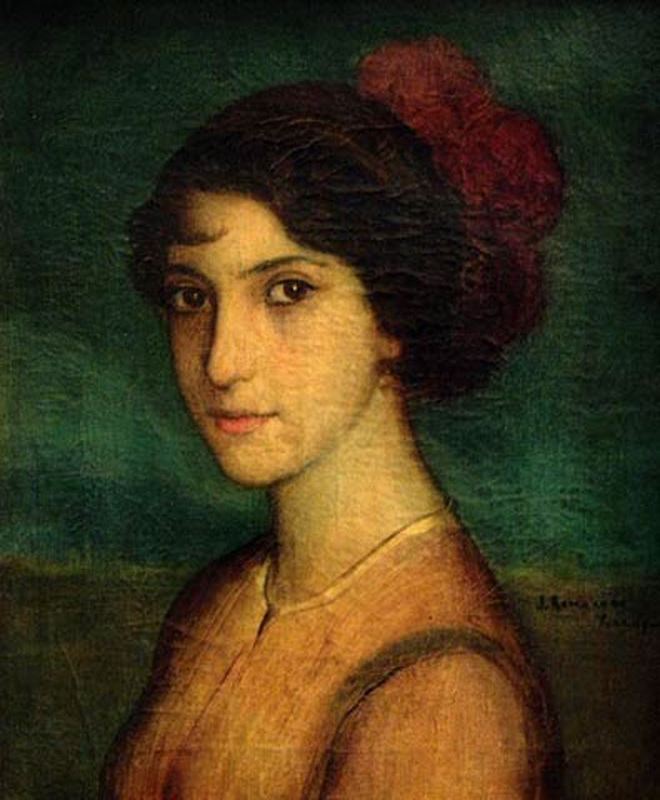 Origin of the word “flamenco”
Another aspect that makes this art a true mystery lies in defining the exact origin of the term “flamenco”. There are multiple theories about the genesis of this word, although perhaps the most widespread is the one defended by Blas Infante in his book “Orígenes de lo flamenco”. According to the father of Andalusian Autonomy, The word “flamenco” derives from the Arabic terms “Felah-Mengus”, which together mean “wandering peasant”.
The curious theory that stated that flamenco was the name of a knife or penknife also had many followers.. Not in vain, in the skit “The Braggart Soldier”, written by González del Castillo in the 18th century, you can read: “The military, What did he get for my husband?, a flamingo”. In another couplet collected by Rodríguez Marín he says: “If you tell me it’s fishing / and I unsheath my flamenco / with forty daggers / “The story was going to end”.
However, This hypothesis has not been transcended, nor did the one who stated that the name had been given to the genus after the bird called flamingo did so.. The authorship of this precept is also due to Rodríguez Marín, who justified the idea by arguing that the singers practiced singing dressed in short jackets, They were tall and small in the waist, so it resembled the wading bird of the same name.
Like the previous ones, Nor does the theory led by experts such as Hipólito Rossy or Carlos Almendro remain uncorroborated, in which it is stated that the word flamenco is due to the fact that the polyphonic music of Spain in the 16th century increased with the Netherlands., that is to say, with old Flanders. This theory was also defended, although with nuances, by the romantic traveler George Borrow and by Hugo Schuchard, among others. According to these writers, In the past it was believed that gypsies were of German origin, which explains why they could be called flamingos.
Finally, There are two less compromised hypotheses, but quite interesting. Antonio Machado y Álvarez, Demophile, It says that “the gypsies call the Andalusians gachós and the Andalusians call the gypsies flamencos.”, without us knowing what the cause of this name is.”. And Manuel García Matos affirms: “Flamenco comes from the slang used at the end of the 18th century and beginning of the 19th century to catalog everything that means ostentatious., pretentious or boastful or, How could we determine in a generic Andalusian way, “echao p’alante”.
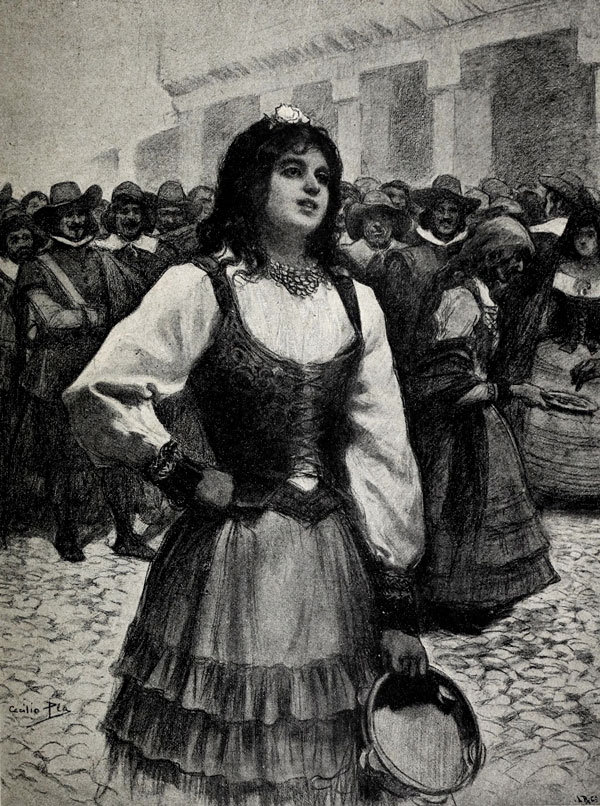 First written references
However, after a deep reading of the work “The Gitanilla”, of Cervantes, It can be observed that, unless the famous writer had told a story from his imagination, which is not surprising, the first flamenco discipline was dancing, as confirmed by the character of Preciosa, a young dancer who made a living doing Andalusian style dances to which both musical and vocal accompaniment were subjugated., both linked to perform the so-called gypsy corridos. At the beginning of this Cervantes Exemplary Novel you can read: “This Preciosa came out, the most unique dancer that was found in all of gypsyism.”, and the most beautiful and discreet that could be found, not among the gypsies, but among as many beautiful and discreet as fame could proclaim.”. The work, written at the beginning of the 17th century, creates the first non-oral precedent in the study of flamenco origins. But you can't throw the bells in the air: the novelistic nature of the story detracts from its realism, Therefore, the data cannot be considered empirical in any way..
This same diatribe arises with the reading of the “Moroccan Letters” by José Cadalso, in 1773. In this work the writer describes a gypsy party in a farmhouse in the Serranía de Ronda, data that, after “La gitanilla”, confirms the existence of a peculiar and differentiating music in Andalusia. Y, finally, the “Dance in Triana” described by Serafín Estébanez Calderón in his “Andalucian Scenes” (1862), which includes the famous singers El Planeta and his student El Fillo, closes the circle around conjectures about the origin of flamenco. From this moment there is already a clear conclusion: the genre is more than two centuries old.
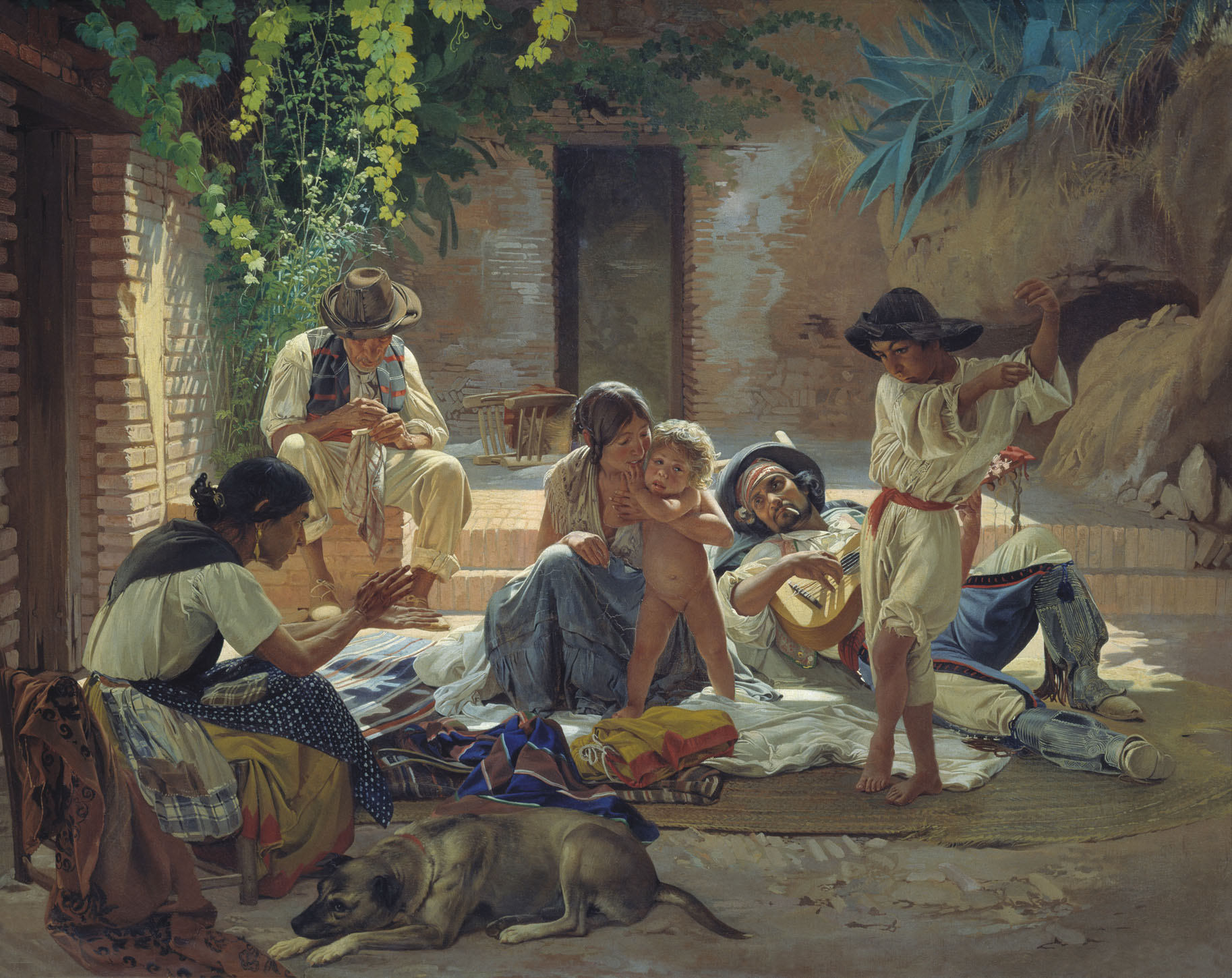 Musical background